

Imagine a young child in a Phoenix classroom. He’s withdrawn, can’t seem to focus, or has frequent emotional outbursts. Our first instinct might be to ask, “What’s wrong with him?”
But trauma-informed care teaches us to ask something far more compassionate and effective: “What has happened to him?” This simple shift in perspective is the key to truly understanding and supporting children and families navigating the immense stress of homelessness. Here at Help Now AZ, this question is the foundation of our mission to advocate for and empower children and families in Arizona, helping them find stability and hope.
Understanding Trauma’s Impact on Children Experiencing Homelessness
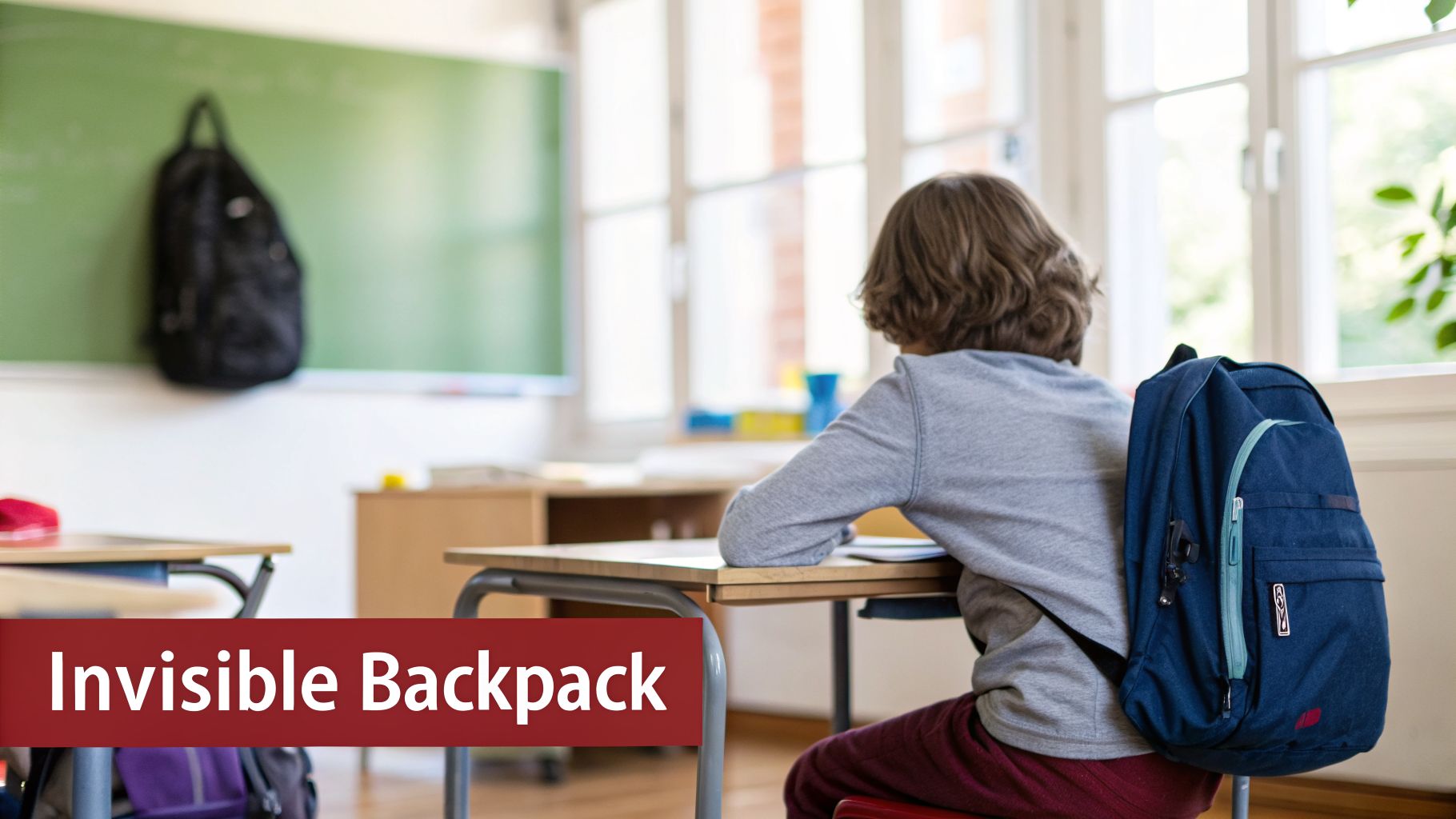
For a child, the trauma of homelessness isn’t always one single event. It’s the constant, grinding weight of instability and fear. It’s not knowing where they’ll sleep, if there will be dinner, or when they’ll have to say goodbye to their friends and school all over again. This relentless distress is like an “invisible backpack” they carry everywhere. While other kids’ backpacks hold books and snacks, a child facing homelessness carries the heavy, unseen burden of their experiences.
The Invisible Backpack of Trauma
This invisible backpack is filled with survival responses that make learning in a classroom or trusting a kind adult feel almost impossible. These are not character flaws; they are natural reactions to overwhelming circumstances.
Here’s what’s often inside that backpack:
- Hypervigilance: A constant state of high alert for danger. This makes it incredibly difficult to relax, feel safe, and concentrate on a math problem.
- Mistrust of Adults: After experiencing instability or broken promises, it’s hard for a child to believe that a teacher or volunteer is truly reliable.
- Emotional Numbness: Sometimes, the only way to cope with constant pain is to shut down. This can look like apathy, but it’s actually a protective shield.
- Fear of the Future: When today is so uncertain, planning for tomorrow feels impossible and even frightening.
Living in this constant state of alert takes a serious toll on a child’s mind and body. The body’s stress response system is always activated, which can interfere with memory, emotional regulation, and the ability to build healthy relationships. You can learn more about how these experiences shape a young mind in our article on the impact of homelessness on child brain development.
Trauma-informed care is the framework that helps us see this invisible backpack. It gives us a compassionate, practical way to interact with vulnerable families so our support promotes healing and dignity—not more harm.
What Is Trauma-Informed Care? From Judgment to Compassion
At its heart, being “trauma-informed” is a profound shift in perspective. It’s about changing the fundamental question we ask when we see someone struggling.
Instead of seeing challenging behaviors and asking, “What’s wrong with you?” a trauma-informed approach teaches us to ask: “What happened to you?”
This simple change is everything. It moves us from judgment to understanding. To grasp this, it helps to understand trauma through the “Three E’s” framework:
- Event(s): The incident itself—or a series of them, like losing a home, experiencing neglect, or witnessing community violence. For families facing homelessness in Arizona, this can be a constant, disruptive cycle.
- Experience: How an individual personally processes the event. Two children can live through the same situation and have completely different internal reactions based on their age, personality, and support systems.
- Effects: The long-lasting consequences. The experience can reshape a child’s behavior, health, and ability to form trusting relationships for years to come.
This is why a one-size-fits-all solution fails. The experience and its effects are unique to every child and family. It’s also why Help Now AZ’s mission is built on this understanding, shaping every action—from how a volunteer offers a snack to how we partner with other organizations. Our goal is always to empower families with choice and dignity. You can discover more about this critical connection in our guide on mental health and homelessness in Phoenix.
This compassionate lens is essential, especially when you realize how common traumatic experiences are. You can explore additional insights by reading more on this topic at MiraclesInAction.info. For the children and families we serve right here in Maricopa County, the instability of homelessness only compounds these challenges.
The 6 Core Principles of Trauma-Informed Care in Action
Understanding trauma is the first step, but how do we respond to it? The answer lies in the six core principles of trauma-informed care, developed by the Substance Abuse and Mental Health Services Administration (SAMHSA). These aren’t just words on a page; they are the values that guide every single interaction at Help Now AZ, from a volunteer packing food to a partner delivering resources.
These six principles show us how to meet people where they are with intentional care that honors their specific experience.
Putting Principles into Practice with Help Now AZ
This framework is the bedrock of our work with homeless children and families in Arizona. The table below breaks down each principle and shows how our volunteers and community partners put them into practice every day, creating an environment where families can begin to heal and rebuild.
| Core Principle | What It Means | How Our Community Can Apply It |
|---|---|---|
| 1. Safety | Creating an environment where people feel physically and emotionally secure. | Show up consistently for your volunteer shift. Use a calm tone of voice. Keep service areas organized and predictable. A warm, consistent smile goes a long way. |
| 2. Trustworthiness & Transparency | Being reliable, honest, and clear in all actions and communications. | Follow through on commitments. If you sign up to help, be there. Being dependable builds trust not just with our organization, but with the families we serve. |
| 3. Peer Support | Recognizing the healing power of shared experiences and mutual support. | Create a welcoming, non-judgmental space for families and fellow volunteers. Connect with a shared sense of purpose, reminding everyone that we are in this together. |
| 4. Collaboration & Mutuality | Shifting from “doing for” to “doing with,” recognizing everyone has a role to play. | Ask for input instead of making assumptions. Partner with families and community members, treating them as equals with valuable insights into their own needs. |
| 5. Empowerment, Voice, & Choice | Restoring a sense of control and dignity by offering meaningful choices. | Whenever possible, offer options. “Would you prefer this item or that one?” Listen actively to feedback from the families and individuals we support. |
| 6. Cultural, Historical, & Gender Issues | Acknowledging and addressing biases, stereotypes, and historical trauma. | Be aware of and respect diverse backgrounds. Use inclusive language. Honor different family structures and cultural norms to ensure everyone feels seen and respected. |
These principles recognize the immense strength and resilience in the families we serve. Our role isn’t to “fix” anyone. It’s to create the conditions where their own strength can shine.
Recognizing the Behavioral Effects of Homelessness on Children
A child’s behavior is often a message about what’s happening on the inside. When a child experiencing the immense stress of homelessness seems withdrawn, can’t concentrate, or has sudden emotional outbursts, it’s not a character flaw. It’s a signal of deep, underlying distress. These behaviors are survival tools, not willful misbehavior. When we see them for what they are, we can respond with empathy instead of judgment.
Common Emotional and Behavioral Signs in Children
Trauma doesn’t look the same for everyone. The effects can vary widely depending on a child’s age, personality, and the specific circumstances they face in Arizona.
Here are some common signs you might observe:
- Young Children (Ages 0-5): Increased clinginess, a sudden fear of being separated from a parent, or a return to earlier behaviors like thumb-sucking. They may also have trouble sleeping or more frequent tantrums.
- School-Aged Children (Ages 6-12): Difficulty with focus and concentration in school, which can lead to a drop in grades. They might become socially withdrawn, get into fights, or complain of headaches and stomachaches with no clear medical cause.
- Teenagers (Ages 13-18): Trauma can manifest as risk-taking behaviors, pulling away from family, or intense feelings of sadness and anger. You may also notice changes in eating or sleeping habits and hear them express hopelessness about the future.
When you see these signs, remember the child’s nervous system is often stuck in a fight, flight, freeze, or fawn response, trying to survive a threat that feels very real. The constant uncertainty of homelessness chips away at their sense of safety—the very foundation of healthy development.
This approach is vital for the families we serve, especially since the stress of homelessness often overlaps with food insecurity. You can learn more by reading our guide on homeless children and food insecurity.
How You Can Practice Trauma-Informed Care and Make a Difference

You don’t have to be a therapist to make a profound difference. Some of the most powerful support comes from everyday people—our volunteers, community partners, and donors who lead with compassion. Every interaction is a chance to help restore the sense of safety, dignity, and control that trauma so often takes away.
From Good Intentions to Impactful Actions
Moving from wanting to help to actually helping in a trauma-informed way is about being thoughtful. It’s about consciously creating an atmosphere of respect and empowerment.
Here are practical steps you can take as a supporter with Help Now AZ:
- Use Person-First Language: Always refer to people with dignity. Instead of “the homeless,” say “people experiencing homelessness.” This affirms their humanity and reminds everyone that circumstances don’t define them.
- Offer Choices to Restore Agency: Trauma can leave a person feeling powerless. By offering simple choices, you hand back a small but significant piece of control. Think, “Would you like the blue backpack or the red one?” It matters.
- Create a Welcoming Atmosphere: Your energy sets the tone. As a volunteer, a warm smile and a calm, non-judgmental attitude create a space that feels psychologically safe for children and families.
You can find more tangible ways to engage by exploring our church and community outreach ideas, which are all built on the principle of respectful partnership. For those wanting to understand the healing process on a deeper level, exploring body-centered approaches like Somatic Therapy For Trauma can be incredibly insightful. Your supportive actions help create the safe external environment needed for internal healing to begin.
Building a Resilient Arizona, Together
Every act of understanding matters. When we connect these individual moments, we see that trauma-informed care is bigger than any single interaction—it’s about weaving a stronger, more resilient community for everyone in Arizona. When a school, a nonprofit, or a neighbor puts these ideas into practice, our shared ability to care for our most vulnerable members gets a powerful boost.
This is one of the smartest investments we can make in Arizona’s future. Programs that create stability for children—often made possible through community generosity and the Arizona Charitable Tax Credit—lead directly to life-changing results:
- Better long-term health outcomes for children.
- Improved school attendance and academic performance.
- A more capable and prepared future workforce for our state.
- A disruption of the generational cycle of poverty and homelessness.
By focusing on these protective factors, we reduce the strain on our emergency services and healthcare systems. We move from a cycle of crisis toward a future of prevention and healing. Recognizing the foundational role of a secure home is a huge piece of this puzzle. You can learn more about the profound importance of stable housing for childhood development in our detailed guide.
Frequently Asked Questions (FAQ)
What is the main goal of trauma-informed care for homeless children?
The main goal is to create a safe, stable, and empowering environment that counteracts the chaos of homelessness. Instead of focusing on “fixing” behaviors, it focuses on building trusting relationships and providing consistent support, which allows children to heal, build resilience, and thrive.
How does homelessness specifically affect a child’s emotional and behavioral health?
The constant stress and instability of homelessness can put a child’s nervous system into a chronic state of “fight or flight.” This can lead to anxiety, difficulty concentrating in school, emotional outbursts, and trouble forming healthy attachments. These are normal survival responses to an abnormal situation.
Do I need special training to apply trauma-informed principles as a volunteer?
No, you don’t need to be a therapist. The core of being trauma-informed as a volunteer is about being compassionate, predictable, and respectful. Simple actions like offering choices, listening without judgment, and greeting families with a warm smile create the safety needed for healing.
Why is asking “What happened to you?” so important?
“What’s wrong with you?” implies blame and puts a child on the defensive. In contrast, “What happened to you?” opens the door to understanding and compassion. It acknowledges that their behaviors are likely a response to difficult experiences, shifting the focus from judgment to support.
If you or someone you know needs help—or if you’d like to support homeless children and families in Arizona—contact Help Now AZ. Call 602-341-3822, email [email protected], or visit our website to learn more, volunteer, or make a donation.