

For a child without a stable home, the school day starts long before the first bell ever rings. Imagine a young girl in Phoenix trying to focus on her teacher, but her stomach is growling with hunger and she’s exhausted after a sleepless night in a crowded, unfamiliar room. The challenges she faces aren’t just academic; they’re a heavy, invisible backpack filled with hunger, exhaustion, and gnawing anxiety that makes learning feel impossible. In Arizona, this is a daily reality for thousands of children.
At Help Now AZ, we witness the profound impact of these school challenges for homeless children every day. Our mission is to lighten that invisible backpack, providing the stability and resources these students need to thrive in the classroom. We believe that by meeting their fundamental needs with dignity, we can help them unpack their burdens and create space for them to learn, grow, and simply be kids.
The Invisible Backpack: What Homeless Children Carry to School
For a child experiencing homelessness, the classroom—a place that should be a sanctuary of learning and opportunity—often becomes another source of overwhelming stress. Their journey to school is a constant battle against instability, and it takes a profound toll on their ability to succeed. This “invisible backpack” contains burdens most classmates will never have to understand.
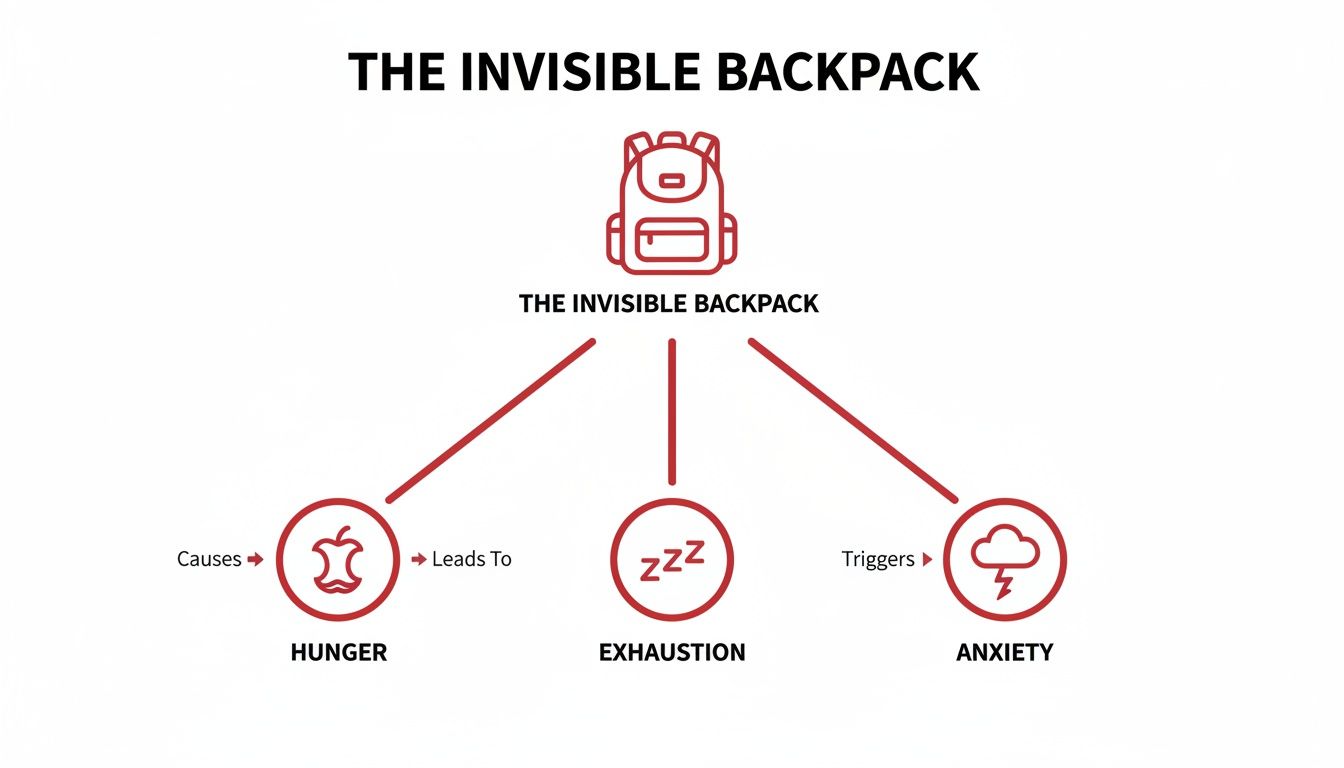
This web of interconnected struggles directly impacts a child’s school success, turning what should be a place of growth into a daily challenge.
What’s Inside the Invisible Backpack?
- Chronic Hunger and Poor Nutrition: Without a reliable kitchen, many children arrive at school hungry. Hunger directly impairs concentration, memory, and energy, making it nearly impossible to focus on a lesson.
- Profound Exhaustion: Unstable sleeping arrangements—whether in shelters, vehicles, or “doubled-up” with other families—lead to severe sleep deprivation. An exhausted child cannot effectively engage in learning or manage their emotions in a busy classroom.
- Intense Anxiety and Trauma: The constant uncertainty of homelessness creates a state of chronic stress. This deep-seated anxiety often manifests as difficulty concentrating, behavioral issues, or social withdrawal as children remain stuck in survival mode.
- Lack of Basic Supplies: Something as simple as not having a pencil, a notebook, or a clean uniform creates powerful feelings of shame and otherness. These essential tools are vital for participation, and their absence is a constant, painful reminder of a child’s situation. Our Back to School Tools program provides these items to restore dignity.
For a child experiencing homelessness, school is often the only stable environment they have. Yet, the very instability of their life outside of school makes it incredibly difficult to succeed within it.
Help Now AZ works to lighten this load. By providing essentials like food, hygiene items, and school supplies through our Project R.E.A.C.H. Programs, we address the immediate physical needs that stand in the way of a child’s education, helping them succeed in school.
Why Getting to School Is a Daily Hurdle
For most families, the morning routine is a predictable rhythm. But for a child experiencing homelessness in Arizona, just getting to school can be a monumental task. The simple act of showing up for class becomes a daily struggle, leading to chronic absenteeism that can knock their education completely off track.
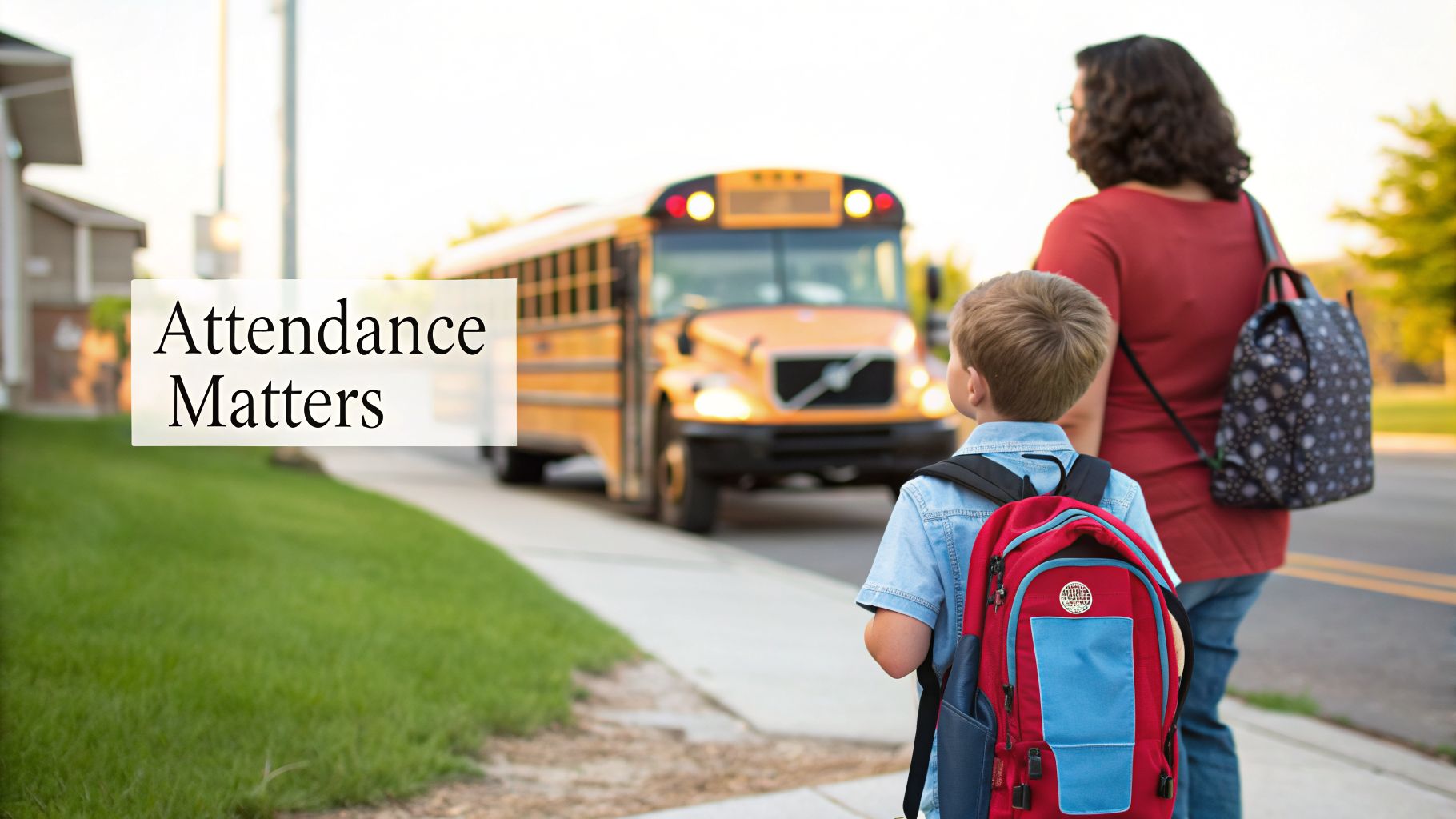
When a family is in crisis, consistent school attendance is one of the first things to suffer. Lacking a reliable car or gas money, a family living in a shelter or motel miles from their child’s school faces an exhausting and often impossible commute. This is a relentless, day-in-day-out grind that makes consistent attendance feel like a distant dream.
The Barriers of Transportation and Instability
These logistical obstacles fuel chronic absenteeism, one of the most critical school challenges for homeless children. A student is considered chronically absent when they miss just two days of school per month. Over a school year, that adds up to a huge amount of lost instruction. Nationally, children experiencing homelessness are far more likely to be chronically absent than their peers.
Constant moves also disrupt a child’s education. Families are often forced from one temporary place to another, which can mean changing schools and losing touch with supportive teachers. While the McKinney-Vento Act gives students the right to stay in their “school of origin,” navigating the system to arrange transportation is a huge burden for parents who are already just trying to survive. If your family is facing instability, Help Now AZ offers resources for preventing eviction and finding support.
Health issues are another major hurdle. A child living in crowded conditions is more likely to get sick. A simple cold can keep a student experiencing homelessness out of school for days.
For these students, showing up is a victory. Every day they walk through the school doors represents a triumph over instability, exhaustion, and logistical chaos.
This is why Help Now AZ’s mission reaches beyond the classroom. We know a child can’t learn if they’re sick, hungry, or overwhelmed. By providing essentials like hygiene items, we help ease the daily pressures that keep kids from making it to school and give them a real chance to succeed.
The Emotional Toll: Social and Behavioral Struggles at School
Beyond attendance and academics, the deepest wounds of homelessness are often the ones you can’t see. For a child navigating the constant trauma of housing instability, school becomes a social and emotional minefield. It’s nearly impossible to focus on making friends when you’re consumed by shame, anxiety, and a profound sense of being different.
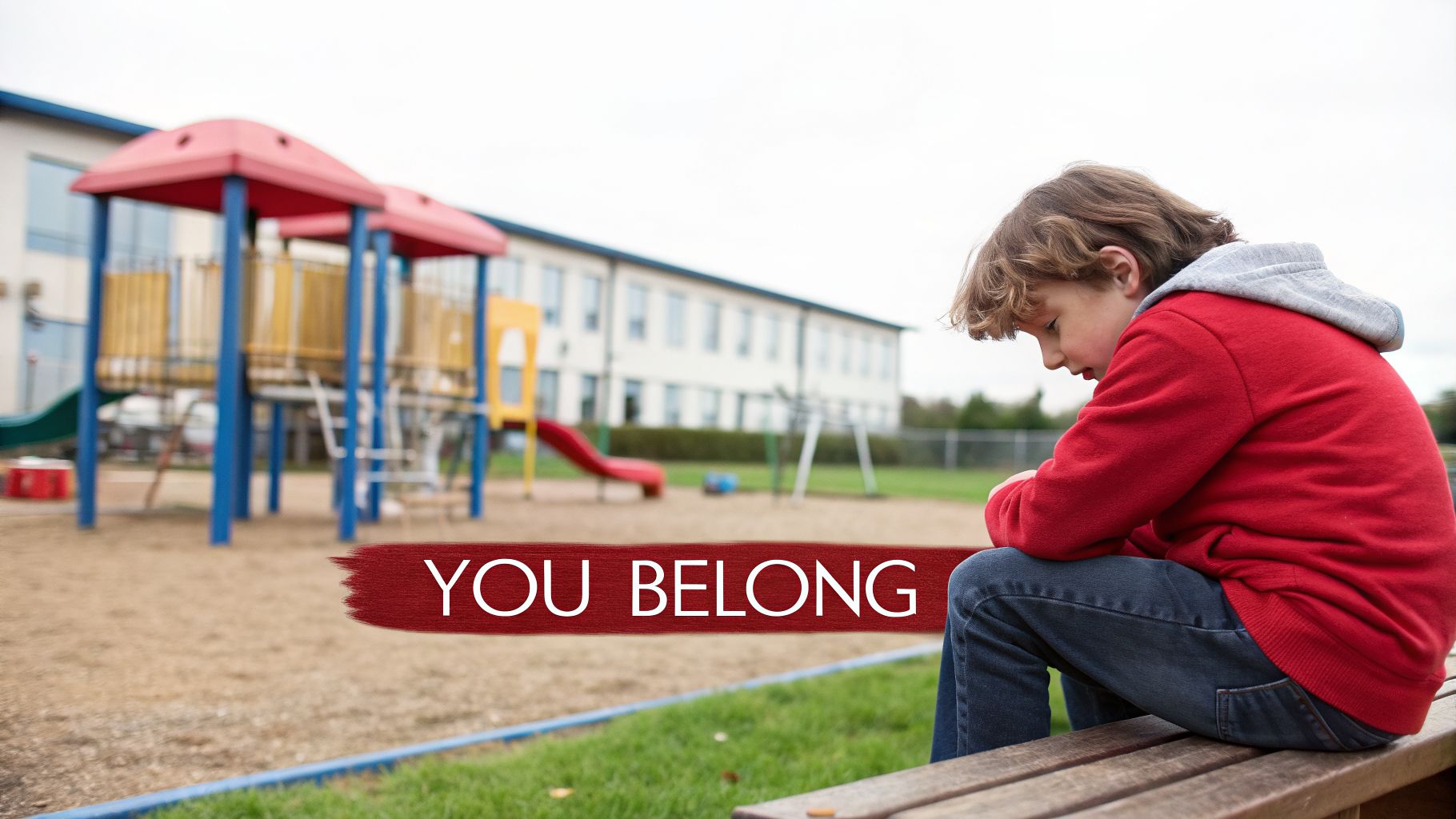
Imagine trying to join a game on the playground while secretly worrying that classmates will make fun of your unwashed clothes or find out you sleep in a car. That fear builds an invisible wall, leaving many children feeling utterly alone. This stigma all too often leads to bullying and social exclusion, hardening a child’s belief that they simply don’t belong.
Navigating a World of Anxiety and Mistrust
The relentless stress of homelessness keeps a child’s nervous system in a constant state of high alert. Being stuck in that “fight-or-flight” mode makes it incredibly difficult to regulate emotions, trust others, or ever feel truly safe. This is why a trauma-informed approach in schools is so critical. When educators understand the why behind a child’s behavior, they can respond with compassion instead of discipline. The chronic stress tied to homelessness has a serious psychological impact, directly affecting their ability to build relationships and learn.
The greatest emotional burden for a child without a home is often the feeling of being invisible. They feel as if their struggles, fears, and hopes don’t matter to anyone.
A child’s brain is wired for connection. When that connection is fractured by trauma, it can have lasting consequences, which we explore in our guide on the impact of homelessness on child brain development. This is where small acts of kindness become powerful interventions.
At Help Now AZ, we know a child’s emotional well-being is as vital as their physical needs. Our H.E.L.P. Snackz program delivers snack bags to schools with a handwritten, uplifting note inside. For a child who feels lost, these notes—with messages like “You are smart” and “You matter”—are a lifeline. They fight the shame and isolation homelessness creates, helping restore the confidence every child deserves.
How Hunger and Health Undermine Learning
A child’s ability to learn starts with a foundation of physical well-being. When a student in Arizona is hungry, sick, or exhausted, their brain simply can’t shift into gear to absorb new lessons.
A growling stomach makes it impossible to focus. A nagging cough or untreated earache turns sitting still at a desk into a miserable ordeal. These aren’t minor distractions—they are fundamental roadblocks that derail a child’s education.
Hunger Makes Learning Impossible
You can’t learn when you’re hungry. When a child shows up to school on an empty stomach, their cognitive functions are sabotaged:
- Memory: Hunger makes it difficult for the brain to file away new information.
- Concentration: A child’s mind is consumed by hunger, not the lesson.
- Energy: Without fuel, a student becomes lethargic and fatigued.
For a child without a kitchen or stocked pantry, a nutritious meal is a luxury. This link between homelessness and food insecurity means thousands of students are trying to learn while battling the fog of an empty stomach.
Poor Health Robs Kids of Opportunity
Children experiencing homelessness get sick more often. Living in crowded shelters or cars exposes them to more illnesses, while a lack of consistent healthcare means common problems go untreated. A child with unmanaged asthma might miss huge chunks of the school year. Chronic dental pain can make paying attention impossible. These kids suffer in silence and fall further behind.
Physical health isn’t separate from education—it’s the very bedrock on which all learning is built. A child who is hungry or unwell is a child who is being denied the chance to reach their full potential.
This is why practical, on-the-ground support is so critical. At Help Now AZ, we address these fundamental needs first. Our H.E.L.P. Snackz and Helping Hungry Families programs provide a direct response. By delivering thousands of healthy snack bags to schools across Maricopa County, we make sure students have the fuel they need to focus, giving them a fair shot at success.
How You Can Help Students Overcome These Challenges
Understanding the deep and difficult school challenges for homeless children is the first step. The next is to act. Here in Arizona, every one of us has the power to turn our compassion into tangible help that allows a child to thrive.
At Help Now AZ, we see how the combined efforts of individual volunteers, local businesses, and community groups create powerful, positive momentum for children and families across Phoenix.
Find Your Way to Make a Difference
There are many ways to support these students, with options that fit any schedule or budget. Whether you give your time, donate funds, or use your voice, your contribution fights against the instability these kids face every day.
| Method of Support | Who It’s For | Direct Impact on Children |
|---|---|---|
| Volunteering | Individuals, corporate teams, and church or community groups. | You directly pack H.E.L.P. Snackz bags or sort school supplies that give a child the nourishment and dignity they need in the classroom. |
| Financial Donation | Anyone who wants to give, from one-time donors to monthly supporters. | Your funds purchase food, hygiene items, and school tools, removing the immediate barriers that keep kids from attending and learning. |
| Item Drives | Schools, offices, and community organizations. | You collect essential goods like snacks, school supplies, or hygiene items that bring immediate relief to families in crisis. See our church and community outreach ideas to get started. |
The Power of the Arizona Charitable Tax Credit
For anyone who pays Arizona state taxes, there’s an incredible, no-cost way to support our work: the Arizona Charitable Tax Credit. This isn’t just a deduction—it’s a dollar-for-dollar credit that directly lowers what you owe in state taxes.
It means you can redirect tax dollars you already have to pay—up to $470 for individuals or $938 for couples filing jointly—straight to Help Now AZ. Your gift costs you nothing extra but provides the critical funding our programs depend on.
When you use the Arizona Charitable Tax Credit (QCO Code 20944), you are telling the state to invest in our community’s most vulnerable children. It is one of the most direct and impactful ways to ensure your tax money creates local, positive change.
Every hour volunteered and every dollar given helps build a network of care around these students. Your support sends a clear message to a child who feels invisible: you are seen, you are valued, and your future matters.
Frequently Asked Questions
How does homelessness directly affect a child’s school performance?
Homelessness creates a perfect storm of academic barriers. Chronic stress, hunger, and exhaustion make it nearly impossible for a child to concentrate, retain information, or complete assignments. Frequent school moves also lead to significant learning gaps, causing them to fall behind their peers through no fault of their own.
What is the McKinney-Vento Act and how does it help students?
The McKinney-Vento Homeless Assistance Act is a federal law ensuring children experiencing homelessness have equal access to public education. It allows them to enroll in school immediately without typical records, remain in their “school of origin” for stability, and receive transportation. This act is a crucial tool for removing barriers to a child’s education.
Are donations to organizations like Help Now AZ tax-deductible?
Yes, absolutely. As a 501(c)(3) nonprofit, all financial contributions to Help Now AZ are tax-deductible. Arizona residents can also use the Arizona Charitable Tax Credit (QCO Code 20944) to receive a dollar-for-dollar credit on their state taxes, making it a powerful, no-cost way to support our mission.
What kind of volunteer opportunities are available to help homeless children?
Our volunteers are the engine of our work. There are many hands-on ways to get involved with Help Now AZ, from packing H.E.L.P. Snackz bags and sorting school supplies to helping with community fundraisers. Each action directly provides a child with the resources and dignity they need to feel hopeful and ready to learn.
If you or someone you know needs help—or if you’d like to support homeless children and families in Arizona—contact Help Now AZ. Call 602-341-3822, email [email protected], or visit helpnowaz.org to learn more, volunteer, or make a donation.