

It’s a story we see play out far too often in Phoenix. A family is doing everything right—working hard, paying bills, raising their kids. Life is manageable. Then, out of nowhere, a crisis hits. It could be a sudden medical bill, a major car repair that can’t wait, or an unexpected job loss. Suddenly, their savings are gone, and the rent is due.
For thousands of families in our community, this is the fragile line between having a home and losing one. The path to homelessness is rarely a single misstep; it’s a devastating spiral triggered when the cost of living outpaces what hardworking people earn, and a sudden crisis shatters their stability. This isn’t about a lack of effort. It’s about a lack of a safety net. At Help Now AZ, we witness these realities every single day, and we believe that truly understanding the root causes is the first step toward building effective, compassionate solutions for children and families.
The Key Drivers Pushing Phoenix Families into Crisis
Homelessness in Phoenix is almost never caused by one single thing. It’s more like a tipping point, where several heavy burdens pile up until a family’s stability finally gives way. Understanding these interconnected challenges—from economic hardship to personal trauma—is essential to creating real change.
Economic Hardship: The Widening Gap
The core of the problem is the massive gap between wages and basic living costs. When rent, groceries, and utilities keep climbing but paychecks stay the same, families are forced into impossible choices. An unexpected expense isn’t just an inconvenience—it’s a direct threat to their housing. In Phoenix, a full-time job at minimum wage is no longer enough to keep a family housed.
Personal Vulnerability: When Crisis Shatters Stability
Life is complicated, and personal crises can shatter even the most stable households.
- Domestic Violence: Fleeing an unsafe home is an act of courage, but it often forces a parent and their children into homelessness with no resources.
- Health Crises: An untreated mental health condition, a struggle with substance use, or a sudden physical illness can make it impossible to hold down a job or manage finances. These are fundamentally health issues, not character flaws, and they require compassionate, trauma-informed support.
- Job Loss: For families living paycheck to paycheck, the loss of a single income can trigger a rapid spiral toward eviction.
Systemic Gaps: A Broken Safety Net
Our community simply doesn’t have enough affordable housing to meet the need. On top of that, crucial social safety nets and pandemic-era aid have disappeared, leaving families with nowhere to turn when they fall. When the system fails to provide a backstop, families are left to face the crisis alone. For children caught in this turmoil, the trauma is immense, disrupting their education, harming their health, and stealing their sense of security.
The Crushing Weight of Phoenix’s Housing Market
If you ask what’s pushing so many families in Maricopa County toward homelessness, the answer is a simple, brutal math problem: the cost of housing has completely outpaced what hardworking families can earn. This isn’t a minor headache; it’s a constant, soul-crushing pressure.
While wages have barely budged for many, the cost of just keeping a roof over your head has shot through the stratosphere. This creates a fragile existence where one piece of bad luck—a busted transmission, a sick child—can start a catastrophic chain reaction.
The Widening Gap Between Wages And Rent
Phoenix has seen some of the fastest-rising rents in the entire country. When the price of a modest two-bedroom apartment jumps by double digits in a single year, families are left scrambling. Intense competition means vacancy rates are at rock bottom. If a family doesn’t have a perfect credit score or a huge security deposit saved up, their options just keep disappearing.
The constant stress of finding and keeping affordable housing creates an invisible weight. It damages parents’ mental health, strains marriages, and makes it almost impossible to focus on anything else when the threat of eviction is always hanging over your head.
This isn’t just a financial burden. Beyond the balance sheet, there’s the emotional toll of housing market pressures. It means parents skipping meals so their kids can eat, putting off a doctor’s visit, and making the impossible choice between paying rent or fixing the car they need to get to work.
One Unexpected Bill Away From Crisis
When you’re living on that financial edge, there’s absolutely no room for error. An emergency room visit, a major car repair, or a sudden cut in work hours can wipe out what little savings a family has managed to scrape together. This is almost always the final push that leads to an eviction notice.
Once a family is evicted, the road back to stability gets incredibly steep. An eviction on their record makes it even harder to find a landlord willing to take a chance on them. This is how one single setback can snowball, forcing a family from their home into a shelter, their car, or the streets.
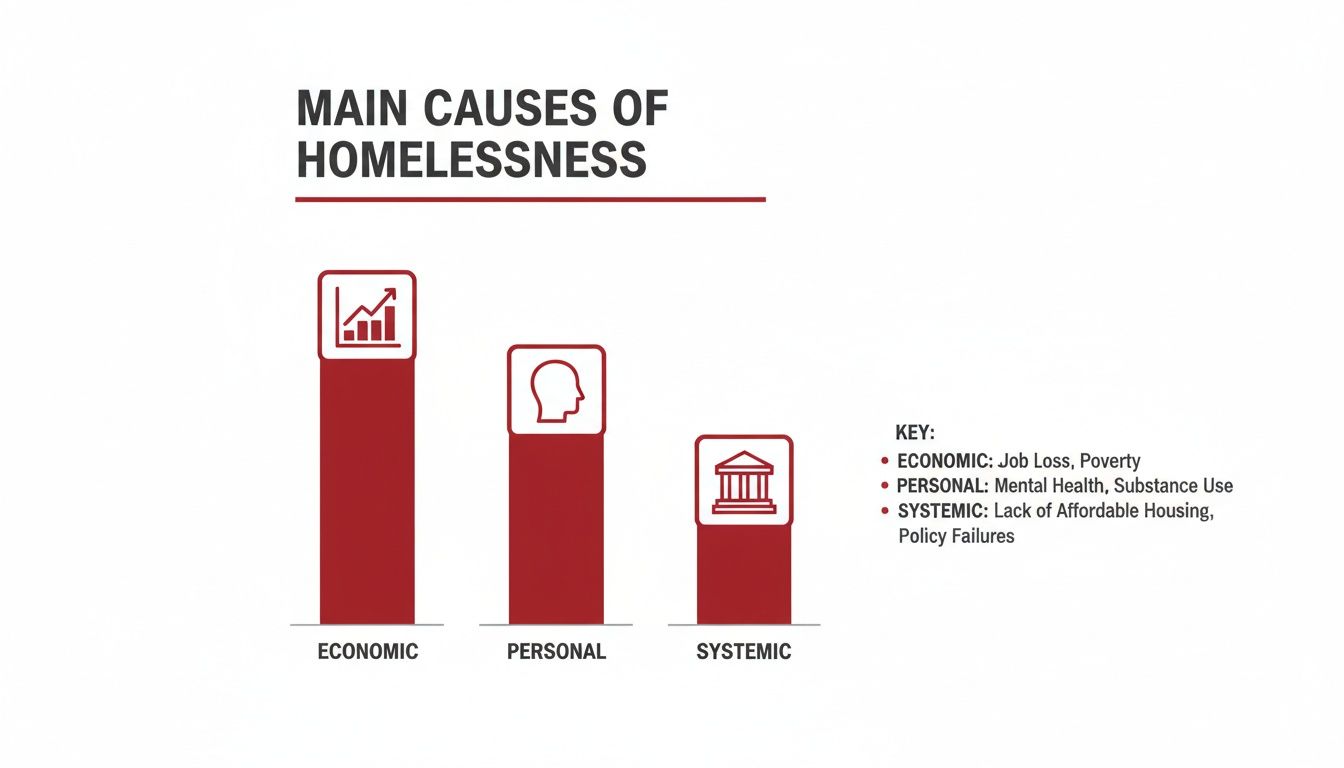
As you can see, economic instability is a powerful current pulling families under, and it’s often made worse by personal crises and systemic failures.
Navigating Personal Crises Without a Safety Net
Economic instability is like a powerful undertow, but it’s often the sudden storm of a personal crisis that finally drags a family under, especially when there’s no safety net to cling to. These crises aren’t about bad choices. We’re talking about health emergencies, the fallout from deep-seated trauma, and desperate acts to find safety.
The Intersection of Health and Housing
Mental health conditions and substance use disorders are two of the most misunderstood pathways to homelessness. For many, they aren’t the cause of the problem but a response to unbearable stress, trauma, or a lack of accessible healthcare. Substance use often follows a similar, tragic pattern—it can become a way to cope with the trauma of poverty or abuse. It’s a health crisis that requires treatment, not judgment.
Fleeing for Safety
For hundreds of families in Phoenix, the journey into homelessness starts with an act of incredible courage: escaping domestic violence. A parent, most often a mother with children, makes the choice to leave an abusive home with nothing but what they can carry. They’re cut off from finances and support systems, and that one brave choice often leads them directly to a shelter. This isn’t their failure; it’s the failure of a community that doesn’t have enough safe places for survivors to land.
“A stable home is the foundation for recovery and healing. When families are forced to choose between violence and homelessness, our community has a profound responsibility to provide a safe place to land.”
Vulnerable Populations in Phoenix
Certain groups face an even steeper climb out of crisis.
- Veterans: Many return with PTSD and other service-related trauma, making it incredibly difficult to readjust to civilian life.
- Youth Aging Out of Foster Care: At 18, these young adults are often thrust into independence without the financial or emotional support most of us take for granted.
- Single-Parent Households: Juggling childcare and a job alone leaves single parents exceptionally vulnerable to a housing crisis.
For these families, the immediate needs are overwhelming, starting with the most basic one: food. The work Help Now AZ does in helping hungry families is a critical first step, providing stability while their parents fight to get back on their feet.
How Systemic Failures Worsen the Crisis
Community support can only do so much against big, systemic problems. While a personal crisis or a sudden job loss often lights the spark, it’s the failure of our larger systems that fans the flames. Gaps in policy, a shocking lack of affordable housing, and sudden funding cuts turn a temporary setback into a long-term tragedy.
The Pandemic Funding Cliff
For a brief time during the pandemic, a major infusion of federal funding gave our community a powerful tool to fight homelessness. This money allowed Phoenix and Maricopa County to open more shelter beds and provide emergency rent help. But that lifeline was temporary.
The sudden end of that federal pandemic aid has become a huge driver of homelessness in Phoenix today. As the funding dried up, the consequences hit hard. According to regional homelessness program manager Brian Gruters, federal sources like the American Rescue Plan Act expired for more than 1,000 shelter beds in Maricopa County this past year alone. You can find out more about how funding changes impact Phoenix homelessness services. That lost funding directly erased the progress we’d made.
A System Under Strain
This “funding cliff” has blown a massive hole in the budget for basic services. The City of Phoenix is now facing a $22 million funding gap just to keep existing services running. This isn’t about adding new programs; it’s about preventing a collapse of the infrastructure that keeps families from living on the streets. When a shelter has to close or a rental assistance program runs out of money, the impact is instant.
For a child, a shelter bed isn’t just a number in a budget report. It’s the one safe, predictable place they have left. Losing it means being thrown back into the chaos and fear of having no home.
The Affordable Housing Shortage
Beyond the immediate funding crisis, the biggest systemic failure is the severe, long-term shortage of affordable housing. For decades, the number of affordable homes built has failed to keep up with our growing population, especially for families with extremely low incomes. This is the direct result of policy choices and a market that favors luxury development over homes for working families.
Nonprofits like Help Now AZ work to fill the gaps left by these systemic breakdowns. When the community steps up, we can bridge some of these gaps. You can explore a guide on how to redirect your Arizona tax dollars to empower children and families and make a huge difference at no extra cost to you.
The Lasting Impact of Homelessness on Children
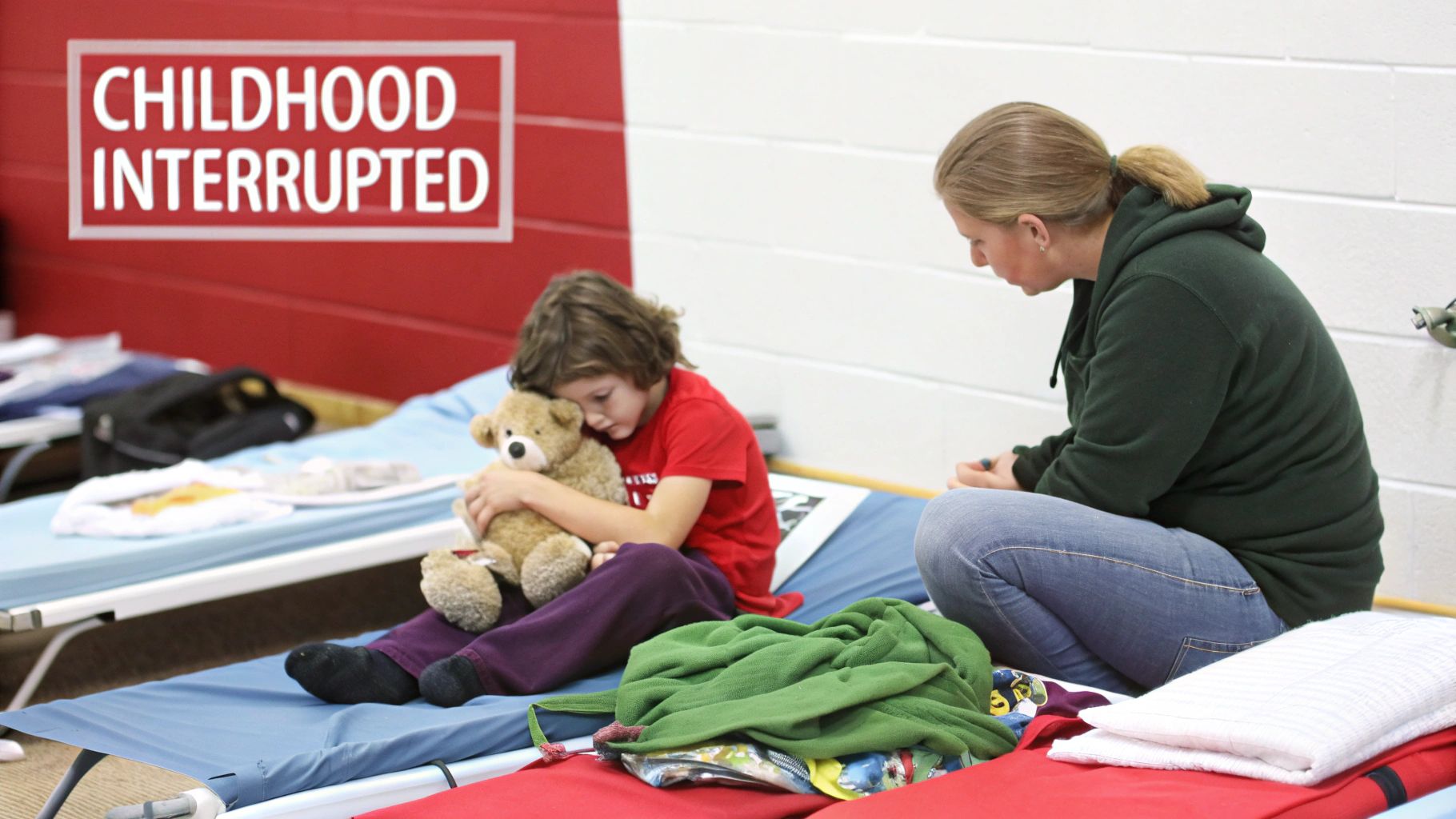
For an adult, losing your home is a crisis. For a child, it’s the collapse of their entire world. Homelessness is more than the loss of a roof; it’s the gut-wrenching loss of safety, routine, and the simple normalcy every child deserves. The experience is profoundly traumatic and can fundamentally alter a child’s developmental path.
Disrupting Critical Brain Development
The unending stress of being homeless—what experts call toxic stress—can physically change how a child’s brain develops. When a child is constantly worried about where they’ll sleep or if they’ll eat, their body is flooded with stress hormones that can damage the parts of the brain responsible for learning, memory, and emotional control.
Barriers to Learning and School Success
A stable home is the launchpad for a successful school year. Children experiencing homelessness are far more likely to miss school, fall behind, and struggle to concentrate. Even simple homework is a huge challenge without a quiet place to study. This is why our annual backpack drive is so critical. It’s more than just supplies; it gives these kids the tools they need to feel confident walking into school and a chance to keep up.
Long-Term Emotional and Behavioral Health
The emotional scars left by homelessness can last a lifetime. Children who live through this trauma are at a much higher risk for long-term mental and behavioral health challenges, including:
- Anxiety and Depression: The constant worry and instability often lead to serious mental health struggles.
- Behavioral Issues: Acting out can be a direct response to trauma and a feeling of having no control.
- Difficulty Forming Attachments: When friendships are constantly disrupted, it becomes hard to build trusting relationships.
At Help Now AZ, we see the children behind the statistics. Our programs are designed not just to provide material aid but to restore a sense of dignity, safety, and hope. By meeting their immediate needs, we create the stability necessary for them to begin healing and, just as importantly, to simply be kids again.
Frequently Asked Questions about the Causes of Homelessness
Why can’t people experiencing homelessness in Phoenix just get a job?
Many people experiencing homelessness are already working, often at multiple low-wage jobs. The core problem is that wages have not kept pace with the extreme cost of rent and living in Phoenix. For those not working, barriers like lack of transportation, a permanent address for applications, or untreated health issues can make finding and keeping a job incredibly difficult without support.
How does the lack of affordable housing cause homelessness?
When rent consumes the majority of a family’s income, they live in a constant state of financial fragility with no ability to save. In Phoenix’s competitive housing market, a single unexpected event—like a car repair or medical bill—can lead to an eviction. With so few affordable options available, this single crisis can push a family directly into homelessness.
What is the connection between domestic violence and homelessness for families?
Fleeing an abusive situation is a primary cause of homelessness, especially for women and children. Survivors often leave with no money, resources, or support system, forced to choose between a dangerous home and the streets. Providing safe, stable housing is the first and most critical step in helping them rebuild their lives with dignity.
How do systemic issues like funding cuts make homelessness worse?
When federal and state funding for shelters and rental assistance programs is cut, the entire safety net for vulnerable families is weakened. In Phoenix, the end of pandemic-era aid has led to the closure of shelter beds and the reduction of essential services. This leaves more families with nowhere to turn during a crisis, directly increasing the number of people experiencing homelessness.
If you or someone you know needs help—or if you’d like to support homeless children and families in Arizona—contact Help Now AZ. Call 602-341-3822, email [email protected], or visit https://helpnowaz.org to learn more, volunteer, or make a donation.