

A parent can be doing everything right and still run out of margin.
In Maricopa County, that might look like a mother getting her children ready for school from a motel room, or from a car parked somewhere safe enough to sleep for a few hours. She’s thinking about work, attendance, laundry, food, and whether her child will have what they need to sit in class without feeling different. For many families, the crisis isn’t one dramatic moment. It’s a string of small shortages that pile up fast.
When people ask how to donate to families in need, they’re usually asking a deeper question. They want to help in a way that reaches a child, supports a parent, and doesn’t create more hassle for a family already carrying too much. That’s the right question.
The Ripple Effect of a Single Caring Act
A child who leaves for school hungry doesn’t just miss a snack. That child may struggle to focus, feel embarrassed asking for help, or try to hide what life feels like outside the classroom. A parent who can’t replace a backpack, buy simple toiletries, or cover holiday basics often carries that stress in silence.
That’s why thoughtful giving matters so much.

A single caring act can interrupt that pressure. A snack bag can help a student get through the day with more focus. A set of school supplies can help a child walk into class with confidence. A holiday gift can tell a family, clearly and without judgment, that their community sees them.
In practice, the strongest support is rarely flashy. It’s reliable. It shows up where families already are, and it respects their dignity from start to finish. That’s why community members often start with practical local giving, volunteer shifts, and school-connected support. If you’re looking for ideas close to home, these meaningful ways to give back to your community in Arizona this year are a strong starting point.
Giving works best when it removes a burden for a family, not when it creates one.
For donors in Phoenix and across Maricopa County, that means thinking less about charity as a one-time gesture and more about usefulness. What will reach a child quickly? What will a school counselor or family liaison be able to distribute? What keeps a parent from having to choose between immediate needs?
Those are the questions that lead to real impact.
Maximize Your Impact with Financial Donations
A school social worker gets a call before lunch. A student needs a backpack, basic toiletries, and food for the weekend. In that moment, cash on hand helps faster than almost any other type of donation because staff can buy the right items the same day and get them to the family without delay.
That flexibility matters. According to NP Trust’s charitable giving statistics, individuals contributed $374.40 billion in 2023, accounting for 67% of all charitable giving in the United States. For family-serving nonprofits in Maricopa County, individual donors often make the difference between waiting for resources and responding now.
Use the Arizona Charitable Tax Credit
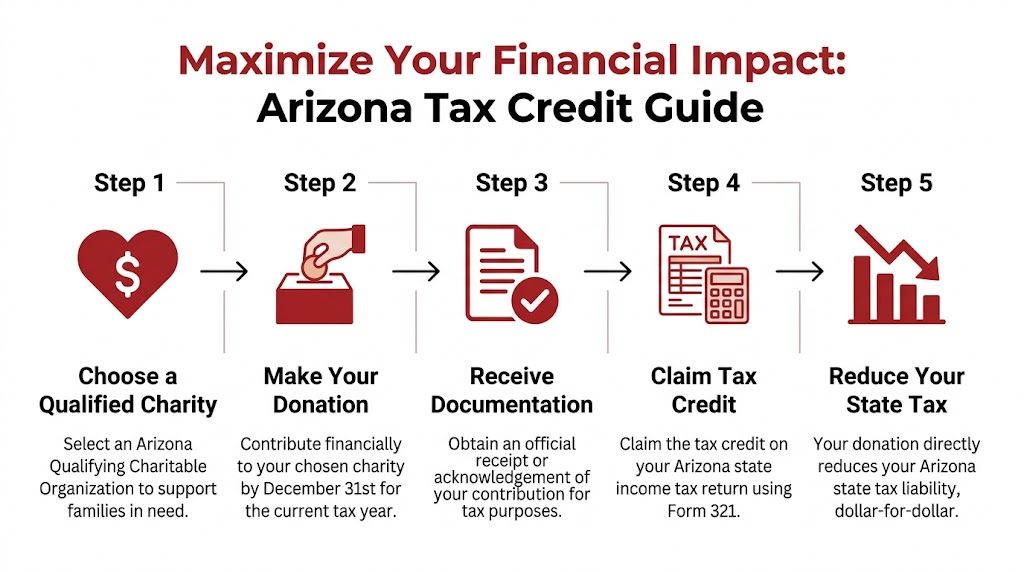
Arizona gives residents one of the clearest ways to keep their giving local. If you owe Arizona state income tax, you may be able to direct part of that tax liability to a qualifying charitable organization instead of sending the full amount to the state.
For many donors, this changes the decision. The question becomes where those dollars will do the most good for children and families in Maricopa County.
A practical process looks like this:
-
Choose a qualifying organization
Confirm the nonprofit has an Arizona Qualifying Charitable Organization number. -
Give before the applicable tax deadline
Save the receipt with your tax records. -
Use the correct Arizona tax form
A tax preparer can help, or you can follow the nonprofit’s instructions. -
Claim the credit on your Arizona return
The credit applies within Arizona’s rules and limits.
For a plain-language walkthrough, see this guide on redirecting your Arizona tax dollars to help children and families.
One-time gifts and recurring support serve different jobs
I encourage donors to match the gift structure to the need they want to solve.
A one-time donation works well for a back-to-school drive, a holiday family sponsorship, or an urgent request from a school partner. Monthly giving is different. It helps program staff plan purchases, reserve support for referrals, and keep services steady after seasonal campaigns end.
Both matter. The trade-off is predictability.
| Giving style | Works well when | Main trade-off |
|---|---|---|
| One-time donation | You want to respond to an immediate need or annual campaign | Support may be less predictable for the organization |
| Monthly donation | You want to provide stable, ongoing help | Requires a longer commitment from you |
| Tax credit donation | You want local impact tied to Arizona state taxes | You need to keep records and file correctly |
A good starting point is simple. Make one gift first. If the mission fits your values and budget, convert it into a smaller monthly donation you can maintain.
What effective financial giving looks like in practice
The strongest cash donations are tied to a clear use case. In Maricopa County, that often means school-based support, direct family referrals, emergency needs, and purchases that staff can make quickly without asking families to wait for the right donated item to appear.
This is also where local knowledge matters for individuals, school groups, and businesses. A company may want a tax-smart year-end gift. A parent group may want to pool smaller donations into one larger contribution. A school club may want to combine fundraising with a service project for young families and include practical items like the baby registry must-haves new parents often need. Each approach can work if the organization can distribute support directly and with dignity.
Many Arizona donors choose Homeless Engagement Lift Partnership (HELP Now AZ) for that reason. The organization runs school-centered programs for children and families in Maricopa County and offers a QCO option for tax credit giving.
Donate Goods Thoughtfully What Families Truly Need
Those who want to help are generous. The problem isn’t intent. The problem is fit.
A common challenge for charities is the mismatch between what donors give and what families need. Effective giving requires moving beyond transactional donations to understand systemic needs and support self-sufficiency, as noted in Stand Together’s discussion of organizations that help low-income families.
Donate with dignity
Donating goods should never feel like unloading leftovers onto families in crisis.
The most useful item is the one a child can use today, safely and confidently. The least useful item is the one that creates sorting work, disposal costs, or an awkward choice for the receiving family.
Here’s the difference.
High-impact donations often include:
- Shelf-stable food: Items that are easy to pack, distribute, and send home through school-based food support.
- New school supplies: Backpacks, notebooks, pencils, folders, and other basics that help students arrive prepared.
- New hygiene items: Sealed toiletries that families can use immediately.
- New, unwrapped toys: Appropriate for seasonal drives when families are being supported with holiday assistance.
- Infant essentials: If a program serves very young children, practical planning helps. For donors building a baby-focused drive, a checklist like these baby registry must-haves can help you choose useful items instead of novelty gifts.
Lower-impact donations often look like:
- Worn-out clothing: Items that are stained, damaged, or not ready for immediate use.
- Miscellaneous household clutter: Goods without a clear match to program needs.
- Opened personal care products: These usually can’t be distributed.
- Items given without checking current needs: Even good items can miss the mark if timing and fit are off.
Match the item to the program
The strongest donation drives are specific.
If your goal is to support child hunger, focus on practical food donations connected to student needs. This page on homeless children and food insecurity gives helpful context for why food support matters so much in school life.
If your goal is back-to-school support, collect supplies that a student can carry and use immediately. If your goal is holiday assistance, stick to the requested toy or family wish list guidance.
The right donation says, “We thought about what would help you,” not “We cleaned out a closet.”
Before you drop off a box
Use a quick screening list:
- Check condition: New or like-new should be the standard for most child- and family-facing goods.
- Confirm acceptance: Ask what’s currently needed before collecting a large volume.
- Sort clearly: Label categories so volunteers and staff can distribute items faster.
- Think about dignity: Ask whether you’d feel comfortable handing the item directly to a child or parent.
That last test is simple, and it usually tells you everything.
Give Your Time with Purpose Volunteer Opportunities
Volunteering is one of the clearest ways to see how support moves from donation to distribution. It also gives people a better understanding of what families need most in real time.
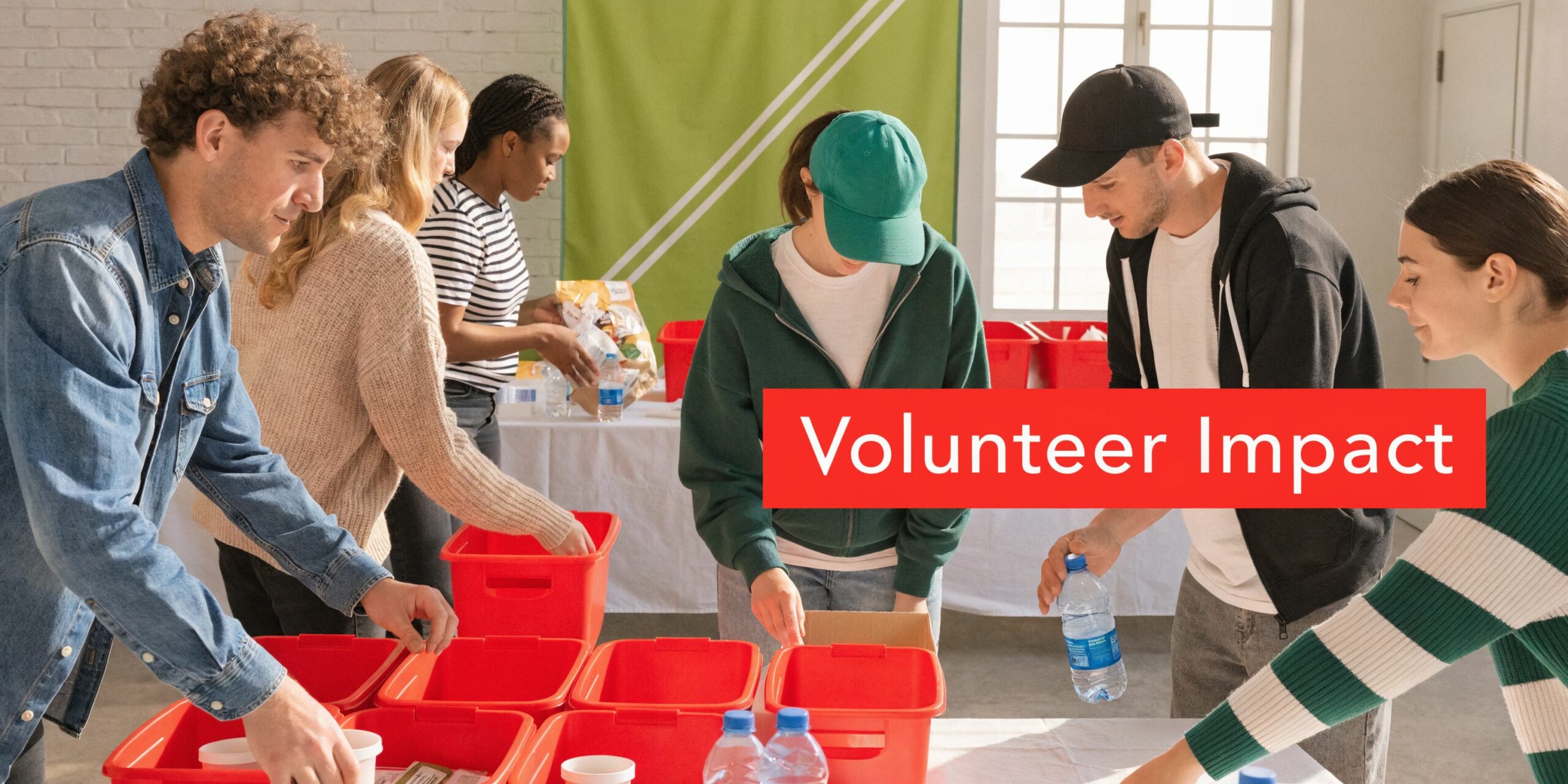
For some donors, a volunteer shift becomes the reason they keep giving. They watch snack bags get packed, school supplies sorted, or seasonal items prepared for delivery, and the work becomes concrete.
What volunteers usually do
Individual volunteers often help with hands-on tasks such as:
- Sorting donations: Grouping items by category, age range, or program use.
- Packing support bags: Preparing food or supply kits that are ready for quick distribution.
- Warehouse organization: Keeping materials accessible so urgent requests can be filled efficiently.
- Event support: Assisting during community drives, collection events, or seasonal campaigns.
For business teams, volunteering can work well as a structured service day. It gives employees a clear assignment, creates shared ownership, and ties community service to something visible and useful.
Why consistency matters
The strongest support isn’t always the largest gift. Often, it’s the repeated one.
According to Mightycause’s fundraising success guidance, top-performing nonprofits retain over 60% of their donors year-over-year. The same basic principle applies to volunteer engagement. When people return regularly, organizations can plan better and serve families with fewer gaps.
That’s why a monthly group shift, recurring packing day, or school-season volunteer calendar often has more operational value than a single burst of activity.
A good volunteer fit for different groups
| Volunteer type | Strong fit | Why it works |
|---|---|---|
| Individuals | Packing, sorting, event help | Easy entry point and immediate usefulness |
| Families | Donation drives and simple assembly tasks | Builds shared community habits |
| Corporate teams | Group service days | Good for coordination and team participation |
| Faith or civic groups | Ongoing collection or packing support | Works well with recurring outreach rhythms |
If your workplace or community group wants ideas before planning a service day, these nonprofit fundraising event ideas can help shape an event that’s practical, not just symbolic.
Consistent volunteers reduce friction for program staff. That saves time, protects energy, and helps aid move faster.
A good first step is to ask one simple question: “What task needs doing this month?” That’s usually where the most useful volunteer work begins.
Bring Joy Through the Adopt A Family Program
Holiday support becomes personal very quickly.
A family may have made it through the fall by juggling motel bills, transportation, school needs, and work schedules. Then the holidays arrive, and with them comes another layer of pressure. Children still hope for joy. Parents still want to provide it. Many can’t.
An Adopt A Family program works because it turns generosity into a structured relationship. A donor, school, church, workplace, or community group is matched with a household that has been identified through trusted channels. The family shares needs or wish-list items. The donor shops intentionally. Staff or volunteers coordinate logistics so the family’s privacy stays protected and the handoff stays respectful.
That logistics piece matters more than many donors realize.
A hidden barrier for families in need is the challenge of receiving aid, including transportation issues or the lack of a stable address. School-centered distribution models help overcome those obstacles by meeting children where they are, as discussed in Impactful Ninja’s overview of charities for low-income families.
What thoughtful family adoption looks like
A strong family adoption process usually includes:
- Careful matching: The donor receives enough detail to give meaningfully, without exposing private information.
- Specific requests: Clothing sizes, children’s ages, household basics, and gift preferences reduce guesswork.
- Managed delivery: Staff coordinate drop-off or distribution in a way that works for the family.
- Respectful boundaries: The focus stays on support, not on creating obligation or discomfort.
Sometimes the most meaningful part isn’t the gift itself. It’s the relief a parent feels when they realize their children won’t be left out.
If you’re interested in seasonal support pathways, the toy drive is one example of a structured giving opportunity that connects donors to local family needs without adding chaos to the delivery process.
How to Vet a Charity and Ensure Your Support Is Effective
Good intentions deserve good stewardship.
Human services organizations matter because they sit inside the community safety net. In the United States, donations to human services organizations recently reached $50.06 billion and represented 12% of all charitable contributions, according to Nonprofits Source’s online giving statistics. That scale makes donor diligence important.
A practical checklist for donors
When you want to donate to families in need, check these basics first:
- Legal status: Verify that the organization is a registered 501(c)(3).
- Arizona tax credit eligibility: If tax credit giving matters to you, confirm the group’s QCO number.
- Program clarity: Look for plain-language descriptions of what the nonprofit does.
- Distribution model: Ask how support reaches families. School partnerships, direct referrals, and structured delivery systems usually tell you more than broad mission language.
- Current needs: A trustworthy nonprofit should be able to tell you what’s needed now, not just what sounds appealing in general.
- Contact transparency: Real phone, email, and organizational details matter.
Questions worth asking before you give
A donor doesn’t need to be suspicious. A donor does need to be attentive.
Ask questions like:
- How do you decide which families receive support?
- Do you accept all donated goods, or only specific items?
- How do you reduce barriers for families who may lack transportation or a stable address?
- What kind of support is seasonal, and what happens year-round?
A reliable charity can explain its intake, distribution, and priorities without hiding behind vague language.
The strongest organizations usually make one thing clear. They don’t just collect donations. They convert them into useful, reachable support.
Frequently Asked Questions About Donating
What’s the most effective way to donate to families in need in Maricopa County
The most effective gift is the one that matches a real, current need. Financial donations are often the most flexible, while carefully selected goods and recurring volunteer support can also make a direct difference. School-connected and family-centered programs usually provide a more reliable path for aid to reach children quickly.
Can my business or workplace organize a donation drive or volunteer day
Yes. Businesses often support families through collection drives, warehouse service days, or seasonal sponsorships. The most successful workplace efforts start with a clear item list, a realistic timeline, and coordination with the nonprofit so the donations fit active program needs.
Are used items helpful, or should I only give new items
Used items can sometimes be useful, but for many family and child-facing programs, new items are the better choice. New school supplies, unopened hygiene products, and new toys help protect dignity and reduce sorting and safety issues. When in doubt, ask for the current wish list before donating.
How can schools support homeless children in Arizona through giving
Schools can help by identifying practical student needs, hosting focused drives, and partnering with nonprofits that distribute support through counselors, liaisons, and McKinney-Vento contacts. That approach reduces transportation and access barriers for families and keeps the process more private for students.
Does the Arizona Charitable Tax Credit apply to donations for homeless children and families
It can, if the donation is made to an eligible Arizona Qualifying Charitable Organization and you follow the applicable filing rules. Donors should keep their receipt, confirm the organization’s QCO information, and speak with a tax professional if they want guidance on their specific return.
If you or someone you know needs help, or if you’d like to support homeless children and families in Arizona, contact Homeless Engagement Lift Partnership (HELP Now AZ). Call 602-341-3822, email [email protected], or visit helpnowaz.org to learn more, volunteer, or make a donation.