

A mother in Phoenix quickly packs a few clothes into a duffle bag, her children’s favorite toys tucked between shirts. The eviction notice felt like an earthquake, shaking the foundation of their lives. Now, standing in a shelter, the immediate future is a blur of uncertainty and fear. For this family, the crisis isn’t a distant headline; it’s happening right now, and the need for help is overwhelming.
That immediate, life-saving response is what we mean by humanitarian relief. It’s the action we take to save lives, ease suffering, and protect human dignity in the middle of chaos. It’s more than just a donation; it’s a lifeline. At Help Now AZ, we see the crisis of family homelessness in Arizona as a humanitarian issue demanding an urgent, compassionate, and local response.
What Does Humanitarian Relief Mean on the Ground?
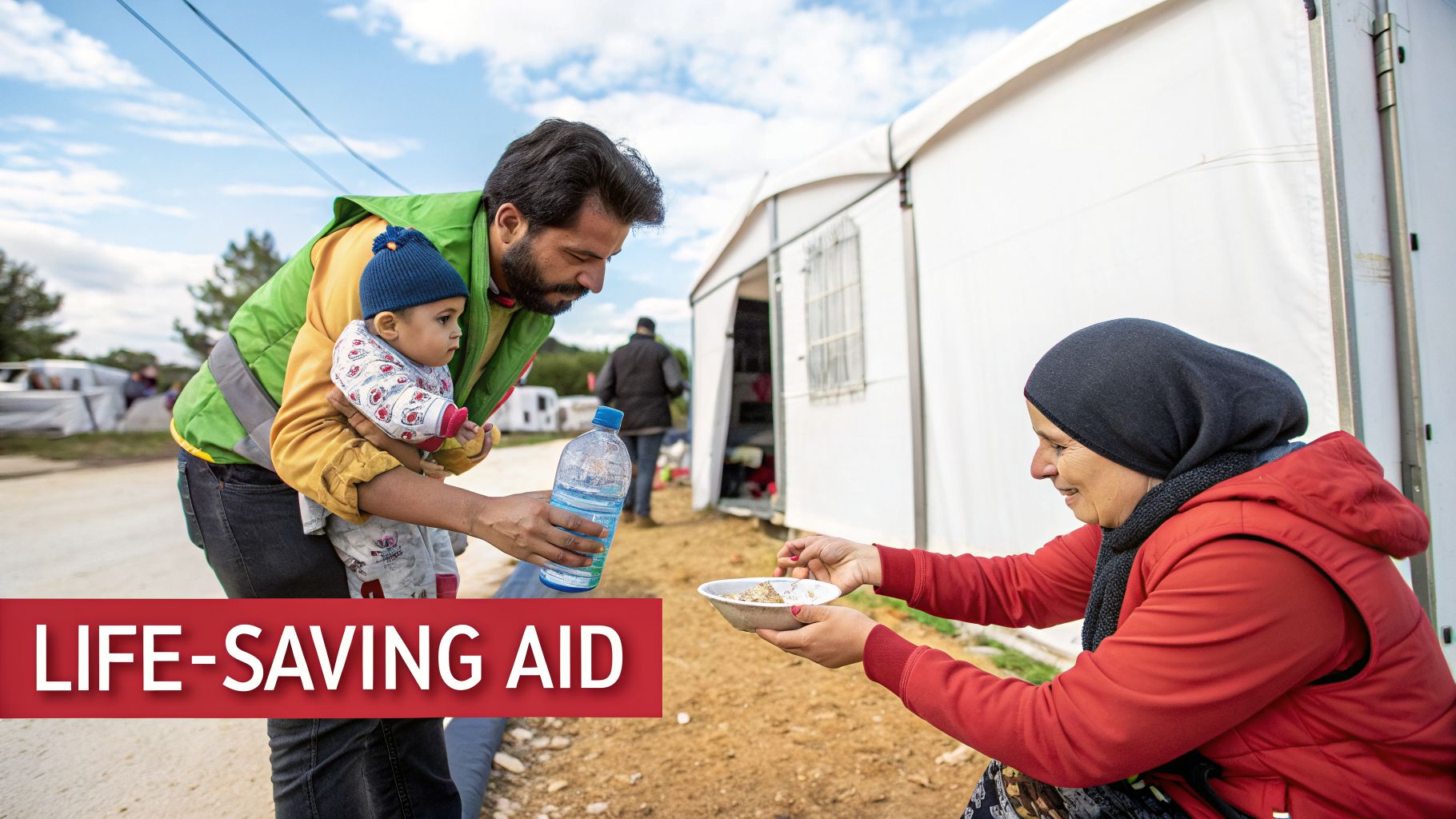
It’s easy to hear the term “humanitarian relief” and feel disconnected, but what does it actually look like in those first critical hours?
For the Phoenix mother and her children, relief isn’t an abstract concept. It’s a warm blanket for a shivering child who misses their own bed. It’s a nutritious meal for parents who have been so focused on their family’s safety they haven’t eaten all day. It’s a bottle of clean water and a safe place to rest, even for just one night.
The Heart of the Mission
At its core, humanitarian relief is a powerful expression of our shared humanity. It’s a promise that when the worst happens, people will not be left to face it alone. While the need is staggering globally—with one in every 27 people on the planet needing assistance in recent years—the principle applies just as urgently to a family facing homelessness in our own community.
This work is all about providing immediate, short-term support to those hit by disasters, conflict, or sudden crises like job loss and eviction.
The goal is simple but profound: to save lives and preserve dignity. This is why a compassionate, rapid response is so critical. It sends a message of hope when it’s needed most.
To get a clearer picture, let’s break down the essential components of humanitarian relief. The aid delivered is tangible and targets the most urgent, life-threatening needs first.
Core Components of Humanitarian Relief
| Type of Aid | Primary Goal | Real-World Example |
|---|---|---|
| Food & Water | Prevent hunger, dehydration, and disease. | Providing emergency food boxes and clean water to a family displaced by an unexpected eviction. |
| Shelter | Protect people from the elements and provide safety. | Offering temporary shelter resources to ensure a family has a safe place to sleep. |
| Essential Supplies | Restore health, hygiene, and dignity. | Distributing hygiene kits and school supplies to children so they can maintain routine and self-esteem. |
These elements work together to create a safety net in the immediate aftermath of a crisis. The support also goes beyond the physical. Understanding what trauma-informed care is is crucial for helping families begin the long process of healing with dignity and respect.
The Guiding Principles of Humanitarian Action
Behind every act of help, there’s a moral compass guiding our decisions. These aren’t just abstract ideas—they are the practical, non-negotiable principles that shape every single thing we do, from a global crisis response to our daily work right here in Arizona.
This ethical code ensures that support reaches those who need it most, fairly and effectively. The core principles are Humanity, Impartiality, Neutrality, and Independence. They are the bedrock of what it means to provide true humanitarian aid.
Humanity and Impartiality
At the very heart of our work is the principle of Humanity. It’s the simple, powerful recognition that when someone is suffering, we have a shared responsibility to help. It’s that gut instinct to step up for a neighbor in crisis.
Working hand-in-hand with this is Impartiality. This means that aid is given based on need alone—no exceptions.
Think of a first responder at an accident. They don’t ask about a person’s background or beliefs before giving medical care. They help the person who is most seriously injured first. That’s impartiality in action.
For us at Help Now AZ, it’s just as straightforward. When a child is hungry, we give them food. It doesn’t matter what school they go to or what their family’s situation looks like. Need is the one and only factor that guides us.
Neutrality and Independence
Neutrality means we don’t take sides in any conflict or disagreement. In a humanitarian context, this allows aid workers to bring relief to suffering people without being seen as an enemy or ally to any group. It’s this trust that opens doors to communities that would otherwise be completely cut off from help.
Finally, Independence is what keeps our mission pure. It means our decisions are driven by one thing and one thing only: the needs of the people we serve. We must remain free from any political or financial influences that could pull our focus away from where it belongs.
This is exactly why your community support is so crucial. When Help Now AZ is funded by the generosity of individuals and partners who believe in our mission, we protect our independence. This empowers us to focus entirely on the needs of children and families facing homelessness in Arizona, guided by these four principles. Our programs, which you can learn about on our Get Involved page, are a living example of these values in practice.
Humanitarian Relief Versus Long-Term Development
It’s easy to hear terms like “humanitarian relief” and “long-term development” used together and assume they’re one and the same. While they are deeply connected, they represent two very different—but equally vital—approaches to helping people. Understanding the difference is key to knowing why organizations like Help Now AZ focus on immediate, crisis-level needs.
A powerful way to think about it is through a medical analogy.
Humanitarian relief is the emergency room. It’s the immediate, fast-paced work of stopping the bleeding, setting the broken bone, and stabilizing the patient after a traumatic event. The goal is to address the most life-threatening injuries, right now.
Long-term development, on the other hand, is the rehabilitation and preventative care that comes next. It’s the physical therapy to rebuild strength, the health education to prevent future illness, and the wellness plan that ensures a healthy future.
The Focus of Relief vs. Development
Humanitarian relief is all about crisis response—think emergency food after a family is evicted, clean water after a natural disaster, or temporary shelter. Its entire purpose is to save lives and alleviate suffering in the immediate aftermath of a disaster.
Development aid works on building sustainable systems for the future. This includes projects like constructing affordable housing, improving public health infrastructure, strengthening local economies, and creating job training programs. It’s about building a community’s capacity to thrive on its own.
All immediate relief work is guided by a strict ethical code, ensuring help is delivered effectively and compassionately.
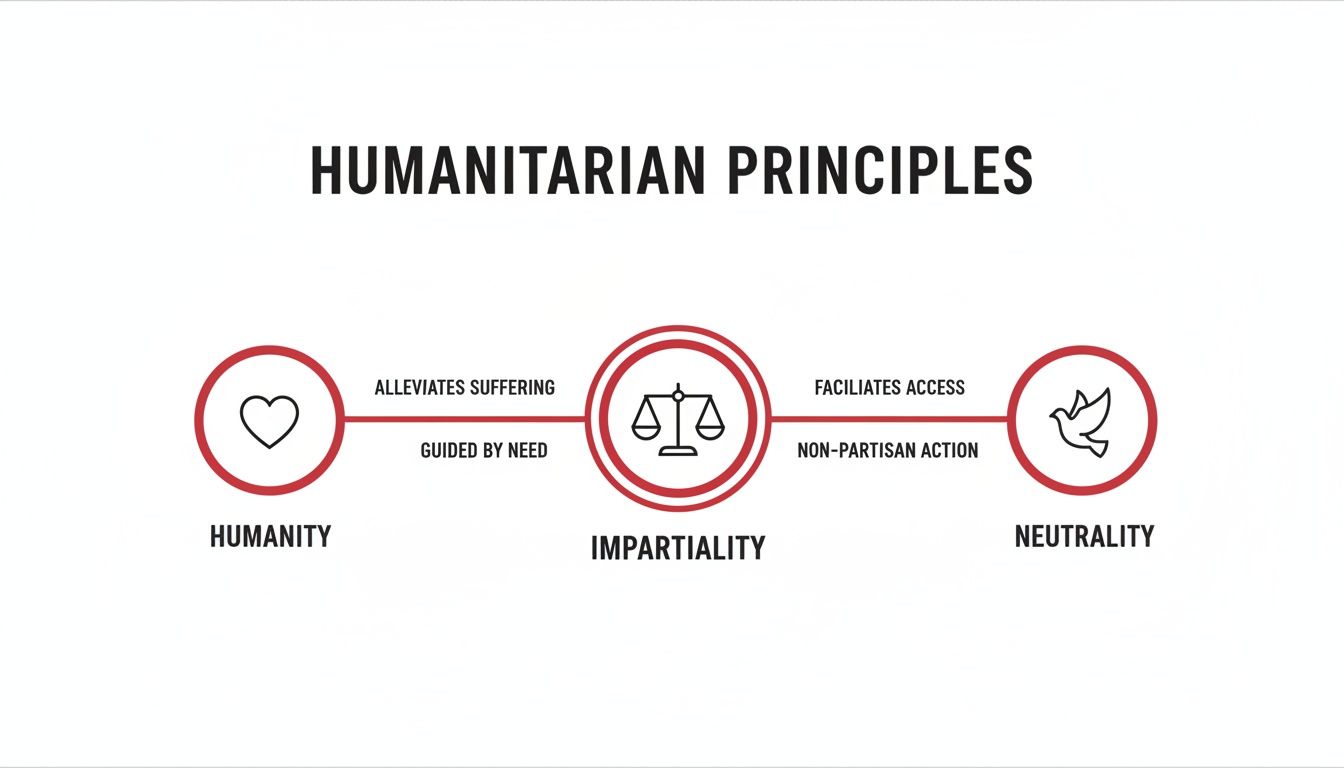
These principles—Humanity, Impartiality, and Neutrality—are the very foundation of trust, allowing organizations to provide aid based on need alone.
The Role of Immediate Aid in Arizona
For a child experiencing homelessness right here in Arizona, the “disaster” is happening right now. They don’t have time to wait for a long-term economic plan to mature; they need food today.
This is where Help Now AZ’s model bridges that critical gap.
Programs like H.E.L.P. Snackz are a perfect example of targeted humanitarian relief. By providing daily, nourishing food, we are “stopping the bleeding” of hunger and instability for a vulnerable child. You can learn more about how homelessness and food insecurity are linked and see the full scope of the problem for Arizona families.
This critical relief creates the stability a child needs to simply focus in school—which is the first step toward long-term success and breaking the cycle of poverty for good.
The Faces of Relief: From Global Agencies to Local Heroes
When crisis strikes, we often see big names on the news—massive global organizations mobilizing to provide life-saving aid. This global network is absolutely critical, but it’s only half the story.
The other half is the powerful, on-the-ground force of neighbors helping neighbors, driven by local nonprofits rooted in the community.
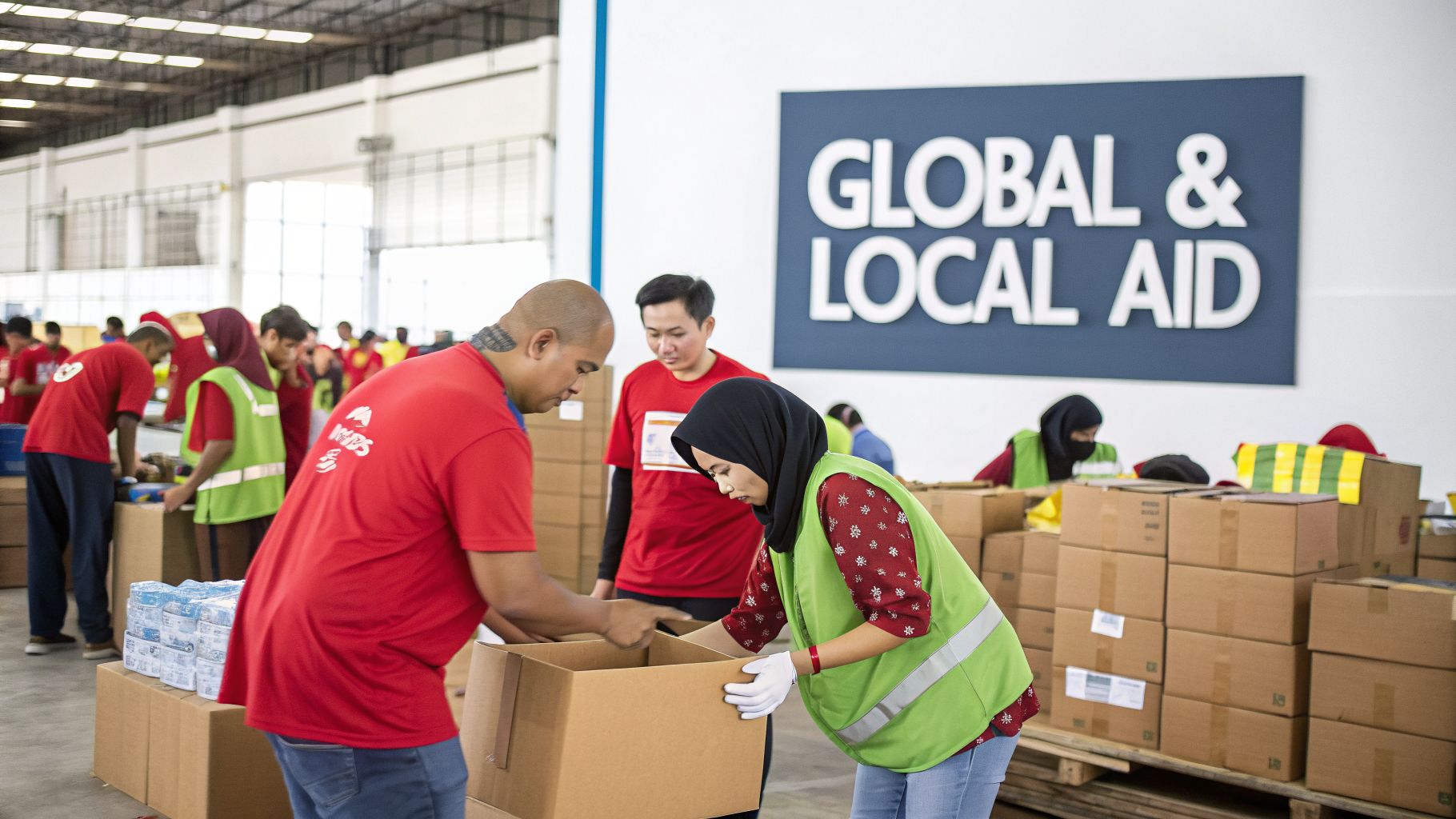
Both global and local groups play a unique and essential role in bringing help and hope to those who need it most.
The Global Responders
On the world stage, a few key players lead the charge in large-scale crises. You’ve probably heard of them.
- United Nations (UN) Agencies: Groups like the World Food Programme (WFP) or UNICEF have the logistical power to coordinate enormous relief efforts, from air-dropping food to millions to setting up safe spaces for children in refugee camps.
- International Non-Governmental Organizations (NGOs): Organizations like the International Red Cross and Red Crescent Movement operate worldwide, providing impartial medical care, shelter, and other vital services in the midst of conflicts and natural disasters.
These organizations are the backbone of the global response, built to handle crises that are simply too big for any single nation to manage alone.
Local Heroes: The Heart of Community Relief
While big agencies manage huge operations, the quickest, most trusted support often comes from much closer to home. This is where local, community-based nonprofits like Help Now AZ become indispensable.
We are the ‘last-mile’ responders. Our strength lies in our deep roots within the community, our established relationships with schools and families, and our ability to respond with speed and precision to the specific needs of our Arizona neighbors.
A global agency might ship tons of supplies to a region, but a local organization knows which Phoenix school just enrolled dozens of newly homeless students. We know the specific barriers those families are facing right now. We translate broad humanitarian principles into direct, personal action. For example, when a corporate partner joins us for a volunteer day, they are fueling a targeted relief effort that puts nourishing food directly into the hands of a child in their own city.
This partnership—combining global principles with local action—is the true engine of compassionate relief. Many groups can get involved, and our guide on church and community outreach ideas shows how businesses and faith-based groups can adopt this local-first approach.
Humanitarian Relief Isn’t Just Global—It’s Right Here in Arizona
When you hear the term “humanitarian crisis,” what comes to mind? For most of us, it’s images of large-scale international disasters—earthquakes, floods, or conflict zones far from home.
But what if the crisis isn’t a natural disaster? What if it’s a family in your own Phoenix neighborhood suddenly without a home, a stable job, or a way to feed their kids? For that family, the emergency is just as real, and their need for help is just as urgent.
This is where the global idea of humanitarian relief becomes intensely personal. The suffering caused by homelessness and poverty requires the same immediate, compassionate response as any other crisis.
From Global Principles to Local Action
You don’t have to fly across the world to take part in a humanitarian effort. Right here in Maricopa County, Help Now AZ puts the core principles of humanitarian aid into practice every single day to support children and families navigating the crisis of homelessness.
We view the instability and trauma of homelessness as the disaster, and our community’s response is the relief. The many complex causes of homelessness in Phoenix create urgent, life-altering needs that we are here to meet, together.
The core idea is simple: a child in our community facing hunger and instability is a humanitarian issue. Our role is to provide immediate, dignified relief to alleviate that suffering and create a foundation for hope.
How Help Now AZ Programs Deliver Humanitarian Relief
Our work directly mirrors the types of aid you see in global relief operations. We provide emergency food, essential supplies, and a vital support system that upholds the dignity and humanity of every person we serve.
This table shows exactly how our local programs are a direct application of humanitarian principles, turning our community’s compassion into real, tangible support for Arizona’s kids.
Help Now AZ Programs as Humanitarian Relief
| Help Now AZ Program | Type of Humanitarian Relief | Immediate Impact on a Child |
|---|---|---|
| H.E.L.P. Snackz | Emergency Food Aid | Provides a daily, reliable source of nutrition, allowing a child to focus in class instead of on their hunger. |
| Back to School Tools | Essential Non-Food Items (NFIs) | Delivers a new backpack and school supplies, giving a child the confidence and tools to start the year equal to their peers. |
| Helping Hungry Families | Food Security Support | Supplies families with groceries, preventing the trauma of food insecurity and keeping the family unit nourished and stable. |
Every snack bag packed, every backpack filled, and every food box delivered is a small but powerful act of humanitarian relief. It’s a message from our community that says, “We see you, we care, and you are not alone.”
How You Can Join the Circle of Compassion
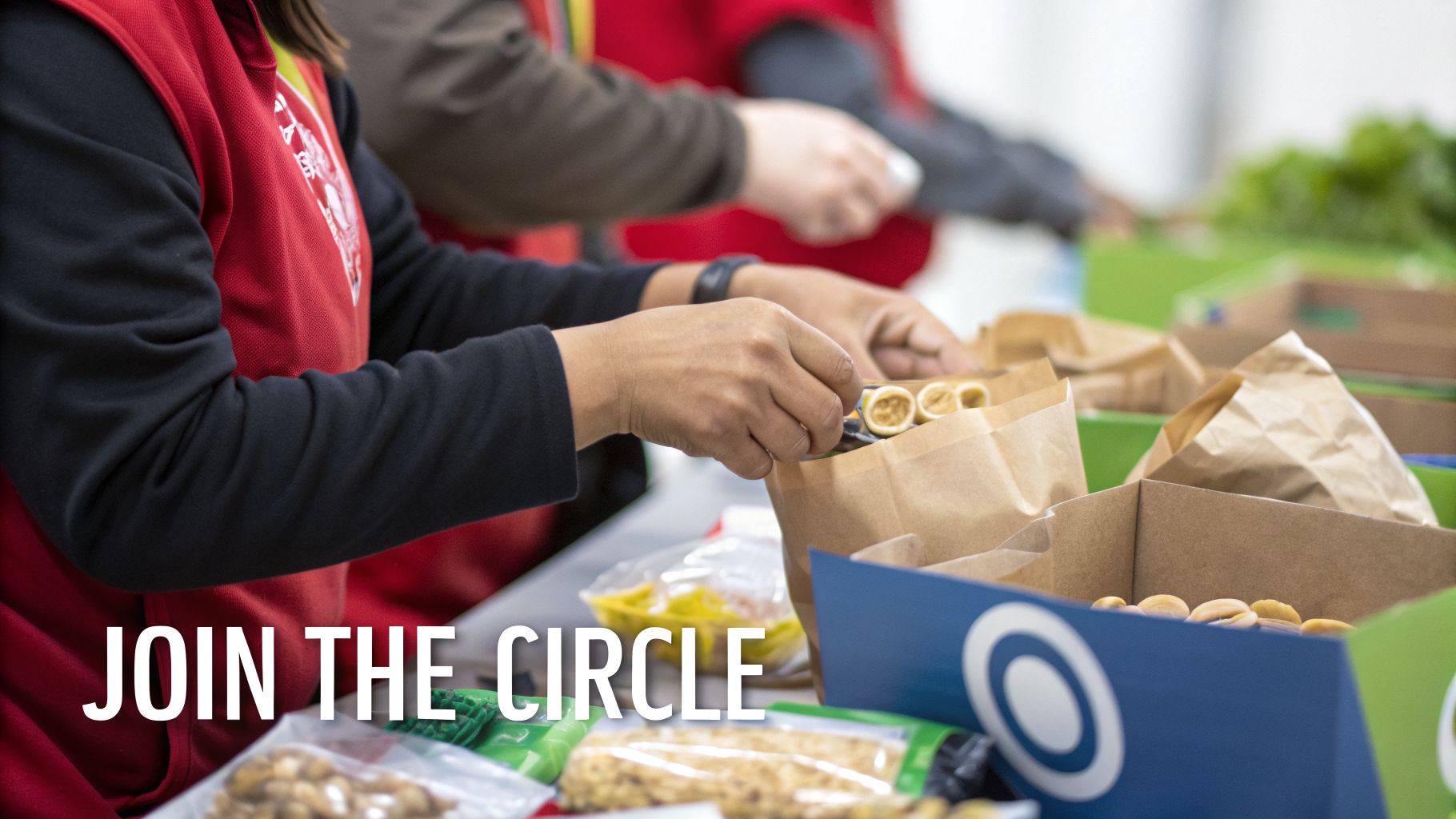
The idea of humanitarian relief isn’t just a concept for global organizations. It’s a powerful call to action for every single one of us. It’s a promise to our shared humanity that says no one, especially not a child in our own community, should ever have to face a crisis alone.
You have the power to bring that promise to life, right here in Arizona.
Turn Compassion into Local Action
When you volunteer to assemble H.E.L.P. Snackz, you’re doing so much more than packing food. You’re joining a real-world assembly line of care, ensuring a local kid can focus on their schoolwork instead of their hunger. When you make a tax-deductible donation, you’re not just giving money; you’re fueling a mission that restores dignity and provides immediate, tangible help.
Every act of support, no matter the size, becomes part of a powerful community response. It’s how we, together, meet the urgent needs created by homelessness and create a circle of compassion around our most vulnerable children.
There are so many ways to get involved, from giving a few hours of your time to organizing something bigger. In fact, we put together a whole guide of nonprofit fundraising event ideas that can help you rally your coworkers or neighbors for a cause that truly matters. Your actions send a clear message of hope.
Three Simple Ways to Provide Relief
You can become a local humanitarian hero today. Here’s how you can make an immediate impact for children facing homelessness in our community:
- Donate: Your contribution directly funds our relief programs, providing food and essential supplies to children in need. As a Qualifying Charitable Organization (QCO #20944), your gift may also qualify for the Arizona Charitable Tax Credit, turning your compassion into a dollar-for-dollar state tax credit.
- Volunteer: Give your time at our warehouse to pack, sort, and prepare aid. It’s a hands-on, deeply rewarding way to provide direct relief and see your impact firsthand.
- Advocate: Use your voice to share our mission and raise awareness about childhood homelessness. Simply sharing our story helps grow our circle of support and brings more people into this vital work.
Frequently Asked Questions
How is humanitarian relief different from charity?
While all humanitarian relief is a form of charity, it’s a very specific kind focused on urgent, life-saving support during a crisis to protect life and dignity. It is guided by strict principles like impartiality to ensure help goes to whoever needs it most, a core value at Help Now AZ.
Can one person really make a difference in a local crisis?
Absolutely. Every large-scale relief effort is built on the actions of individuals. When you volunteer with us to pack a food box or make a donation that helps a family, you are providing direct humanitarian aid and sending a powerful message of hope to a neighbor in crisis.
Why are neutrality and impartiality so important in this work?
These principles are the ethical bedrock of humanitarian work, guaranteeing that help is given based on need alone—not politics, religion, race, or anything else. For Help Now AZ, it means every single child experiencing homelessness in our community receives our unconditional support, ensuring our resources do the most good.
Is family homelessness in Arizona a humanitarian issue?
Yes, without a doubt. A humanitarian crisis is any situation that threatens the health, safety, and well-being of a community on a large scale. The lack of stable shelter, food insecurity, and health risks faced by homeless children and families in Arizona constitute a crisis that demands an urgent, compassionate, and relief-focused response.
If you or someone you know needs help—or if you’d like to support homeless children and families in Arizona—contact Help Now AZ. Call 602-341-3822, email [email protected], or visit helpnowaz.org to learn more, volunteer, or make a donation.