

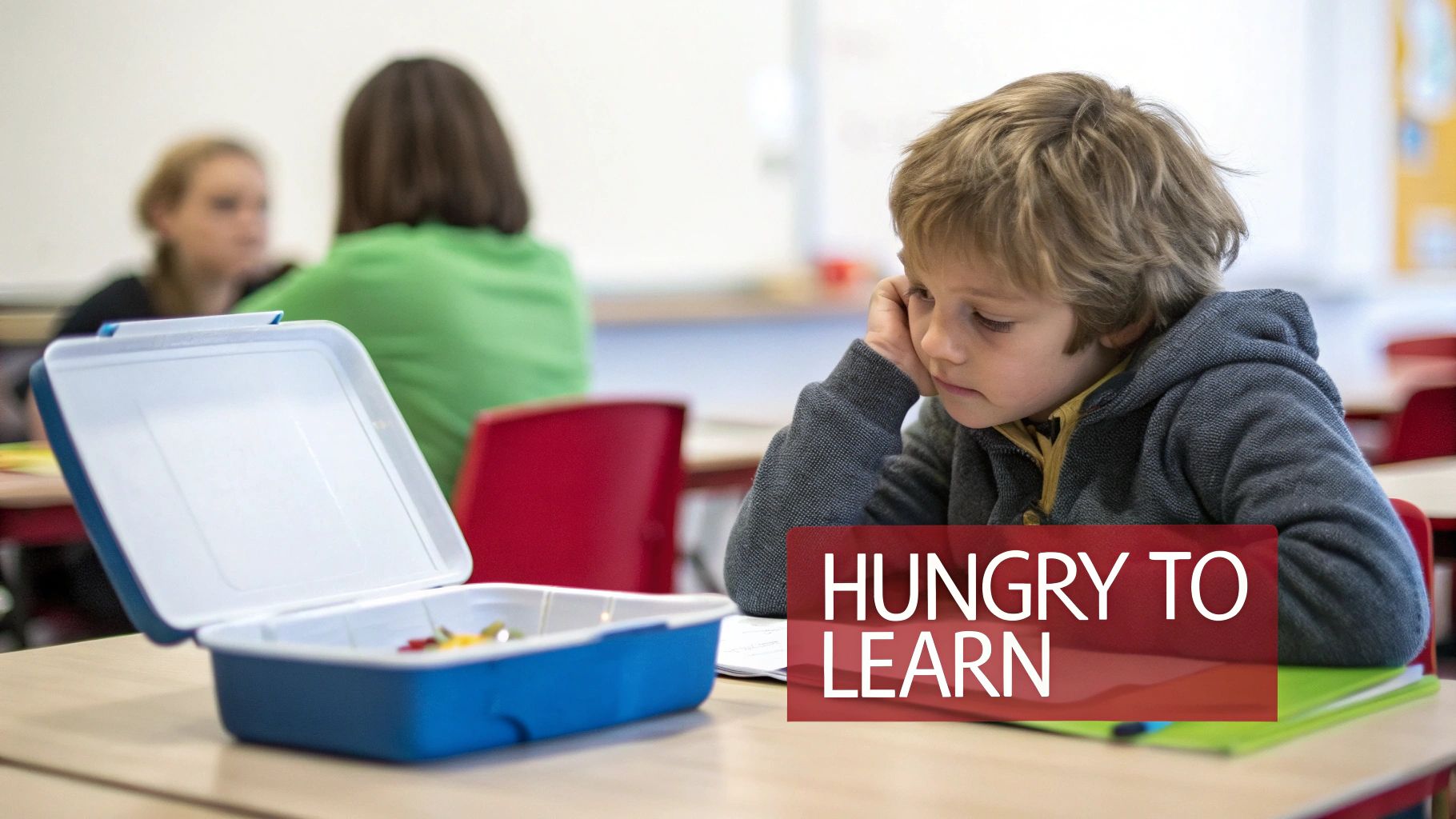
A third grader in Phoenix tries to focus on her math lesson, but the gnawing ache in her stomach is all she can think about. For thousands of children across Arizona, the trauma of not having a stable home is tangled up with the constant stress of being hungry. This devastating overlap between homeless children and food insecurity isn’t an abstract issue—it’s an immediate crisis unfolding in our local schools, directly impacting a child’s ability to learn, grow, and simply feel safe.
At Help Now AZ, we see this reality every day. We understand that a stable home is the foundation for a child’s well-being, and its absence almost always leads to a nutrition crisis. Our programs are designed to provide immediate relief and long-term support, ensuring that even in the midst of instability, children in our community have the nourishment they need to thrive.
The Invisible Crisis Facing Arizona’s Children
When a family in Phoenix loses their home, they lose far more than a roof over their heads. They lose the simple stability needed to provide regular, healthy meals. The daily scramble to find a safe place to sleep leaves little time, money, or energy to think about balanced nutrition. It’s a heartbreaking struggle for parents trying to shield their kids from the harsh reality of their situation, a fight we see in stories like that of one mother and her boys on the streets.
Losing a home almost instantly creates a nutrition crisis. Without a kitchen, a fridge, or even a pantry, families are forced to depend on cheap, non-perishable foods that are often stripped of vital nutrients. For a child, this sudden upheaval means:
- Inconsistent Access to Food: Meals become unpredictable, often depending on a shelter’s schedule or the kindness of strangers.
- Poor Nutritional Quality: With no way to cook or store food, options are often limited to fast food or convenience store items—high in calories but low in the nutrients a growing body needs.
- Emotional Stress Around Eating: Children quickly develop a deep-seated anxiety about when, or if, their next meal will come. This fear layers even more trauma on top of the instability of not having a home.
At Help Now AZ, we know firsthand that a simple, nutritious snack can be so much more than just food. It’s a message of hope and a moment of stability in a day filled with uncertainty. Our school-based programs are designed to meet kids right where they are, providing a reliable source of support that eases the incredible burden on both students and their families.
How Losing a Home Impacts a Child’s Nutrition
To truly understand the crisis families are facing here in Arizona, you have to see that homeless children and food insecurity aren’t two separate issues. They’re two sides of the same coin, tangled together in a devastating cycle that’s incredibly hard to break. When a family loses their home, they also lose the most basic tools for feeding their children.
| Challenge of Homelessness | Impact on Food Security | How Help Now AZ Responds |
|---|---|---|
| No Kitchen or Refrigerator | Families must rely on non-perishable, processed foods. | We provide ready-to-eat, nutritious snacks and emergency food boxes with items that don’t require cooking. |
| Unstable Income & Budget | Limited money goes to immediate shelter (like a motel room), leaving nothing for groceries. | Our free food resources free up a family’s limited funds for other critical needs like transportation or medicine. |
| Constant Transience & Mobility | Families can’t store food, shop in bulk, or access consistent pantries. | We place resources directly in schools and community hubs, making them accessible no matter where a family is staying that night. |
This isn’t just about being hungry; it’s about the deep, lasting impact of nutritional instability on a developing child. It’s a direct line from losing a home to a child going without the food they need.
The Children in Our Classrooms
In Arizona’s schools, these children are often identified under the McKinney-Vento Act, a federal law that supports children who lack a fixed, regular, and adequate nighttime residence. A McKinney-Vento student might be:
- Sharing a home with others because their family lost their own housing (“doubled-up”).
- Living in motels, hotels, or campgrounds because there’s nowhere else to go.
- Staying in emergency or transitional shelters.
- Sleeping in cars, parks, or other public spaces.
These are the kids sitting right beside their peers in the classroom, carrying the invisible weight of where they’ll sleep tonight or when they’ll get their next real meal. Every number represents a child trying to learn while fighting hunger pangs. Our programs for Helping Hungry Families are designed to lift that exact burden.
How Hunger Affects a Child’s Development and Future
When a child is food insecure, their body isn’t just missing a meal—it’s being starved of the very fuel it needs to build a healthy future. Without consistent, nutritious food, their growth, ability to learn, and emotional well-being stall. The effects of chronic hunger can cast a long shadow, creating invisible barriers that follow a child for the rest of their life.
The Physical Toll of Malnutrition
Consistent access to vitamins, minerals, and proteins is the bedrock of a healthy childhood. When food is scarce or lacks nutrition, the physical consequences are serious.
- Stunted Growth: Without essential building blocks, children may not reach their full growth potential.
- Weakened Immune System: Malnutrition leaves children vulnerable to common illnesses, turning a simple cold into a severe health issue.
- Chronic Health Conditions: A diet of cheap, processed foods—often the only option for families without kitchens—increases the risk of long-term health problems like obesity and diabetes.
These physical struggles create a painful cycle. Poor health leads to more missed school days, causing students to fall further behind.
The Cognitive Impact on Learning
A hungry mind cannot learn. The connection between homeless children and food insecurity becomes devastatingly clear in the classroom. A child’s brain uses a massive amount of energy, and when that source is gone, it directly impacts their ability to:
- Concentrate: It’s nearly impossible to focus on a lesson when your stomach is growling.
- Retain Information: Malnutrition affects memory, making it harder for students to learn new concepts.
- Manage Behavior: Low blood sugar can cause irritability and restlessness, which is too often mistaken for a “behavior problem” when it’s a symptom of hunger.
Emotional and Behavioral Challenges
The constant stress of not knowing where your next meal is coming from takes a profound emotional toll. This prolonged state of high alert can literally rewire a child’s brain, often leading to anxiety, depression, and withdrawal. The trauma of food insecurity can also cause children to pull away from their friends, robbing them of crucial social development. Understanding that this experience can lead to understanding developmental trauma is critical to providing compassionate, effective support.
How Community-Based Solutions Restore Hope
When a child’s world is turned upside down by homelessness and food insecurity, school often becomes their one safe harbor. This is precisely why school-centered solutions are essential for restoring a child’s sense of hope. By anchoring our programs within the school system, Help Now AZ can reach vulnerable children consistently, discreetly, and with dignity.
H.E.L.P. Snackz: A Daily Dose of Nourishment and Hope
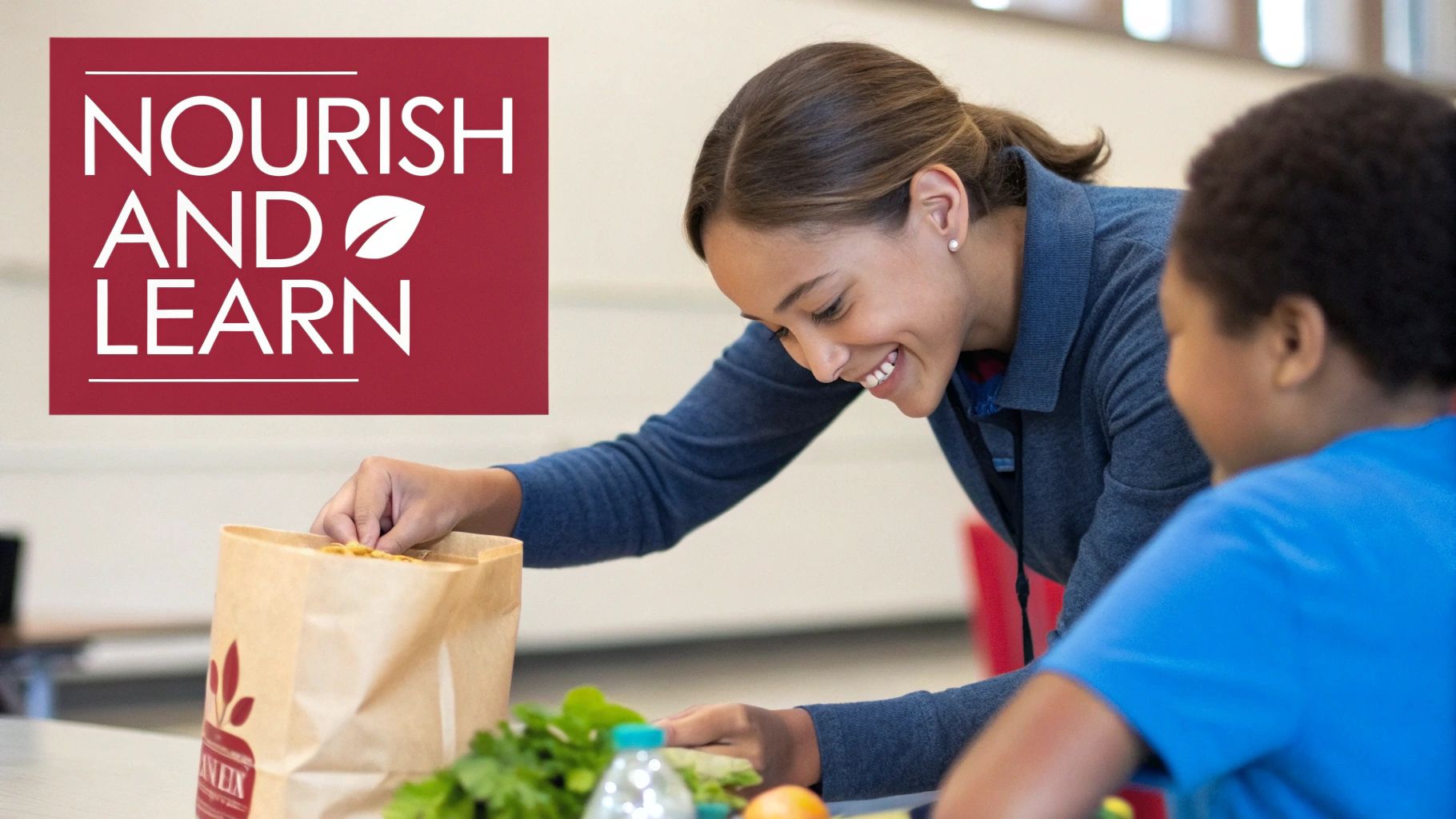
A simple snack can be the difference between a student who is lethargic and unable to focus, and one who feels energized and ready to learn. Our signature H.E.L.P. Snackz program was built on this truth. Each day, our volunteers pack thousands of snack bags with nutritious, easy-to-eat items for children across Maricopa County.
Tucked inside each bag is also an uplifting, handwritten message of encouragement. Simple notes like “You are amazing!” serve as a powerful reminder that someone in their community cares. This blend of physical and emotional nourishment tells a child they are valued—a critical message for anyone navigating the trauma of homelessness. You can see how these simple bags make a huge difference by exploring our H.E.L.P. Snackz program.
Helping Hungry Families: Easing the Burden on Parents
We know that hunger doesn’t stop when the school bell rings. Our Helping Hungry Families initiative provides families with substantial food boxes filled with pantry staples to lift some of the weight off parents grappling with housing instability. This support achieves several critical goals:
- Frees Up Limited Resources: Families can use scarce funds for other urgent needs, like gas for a job interview or a deposit on temporary housing.
- Provides Nutritional Stability: The food boxes help ensure children have meals over weekends and school breaks.
- Restores Dignity: Receiving this support with compassion helps restore a sense of dignity to parents doing everything they can for their children.
To amplify these efforts, communities and parents can also champion various school-based fundraising initiatives that directly benefit their peers.
The Power of Community Partnership
This work is only possible through strong partnerships with schools, community organizations, and caring individuals across Arizona. School counselors and social workers are our eyes and ears on the ground, identifying students who need help and ensuring our resources get into the right hands. Our dedicated volunteers and donors are the engine that keeps these programs running. Every snack bag packed, every food box assembled, and every dollar donated translates directly into a child who can focus on their education instead of their hunger.
Practical Ways You Can Help Homeless Children in Arizona
The reality of childhood homelessness and hunger in our community can feel overwhelming, but this is a challenge we can meet—together. Every act of support sends a powerful message to a child and their family: you are not invisible, and we care. Your help provides the tangible relief that lets a child focus on being a kid again.
At Help Now AZ, we believe everyone has a part to play. Whether you give your time, resources, or voice, you can make a measurable difference in the lives of homeless children and families in Arizona.
Volunteer Your Time
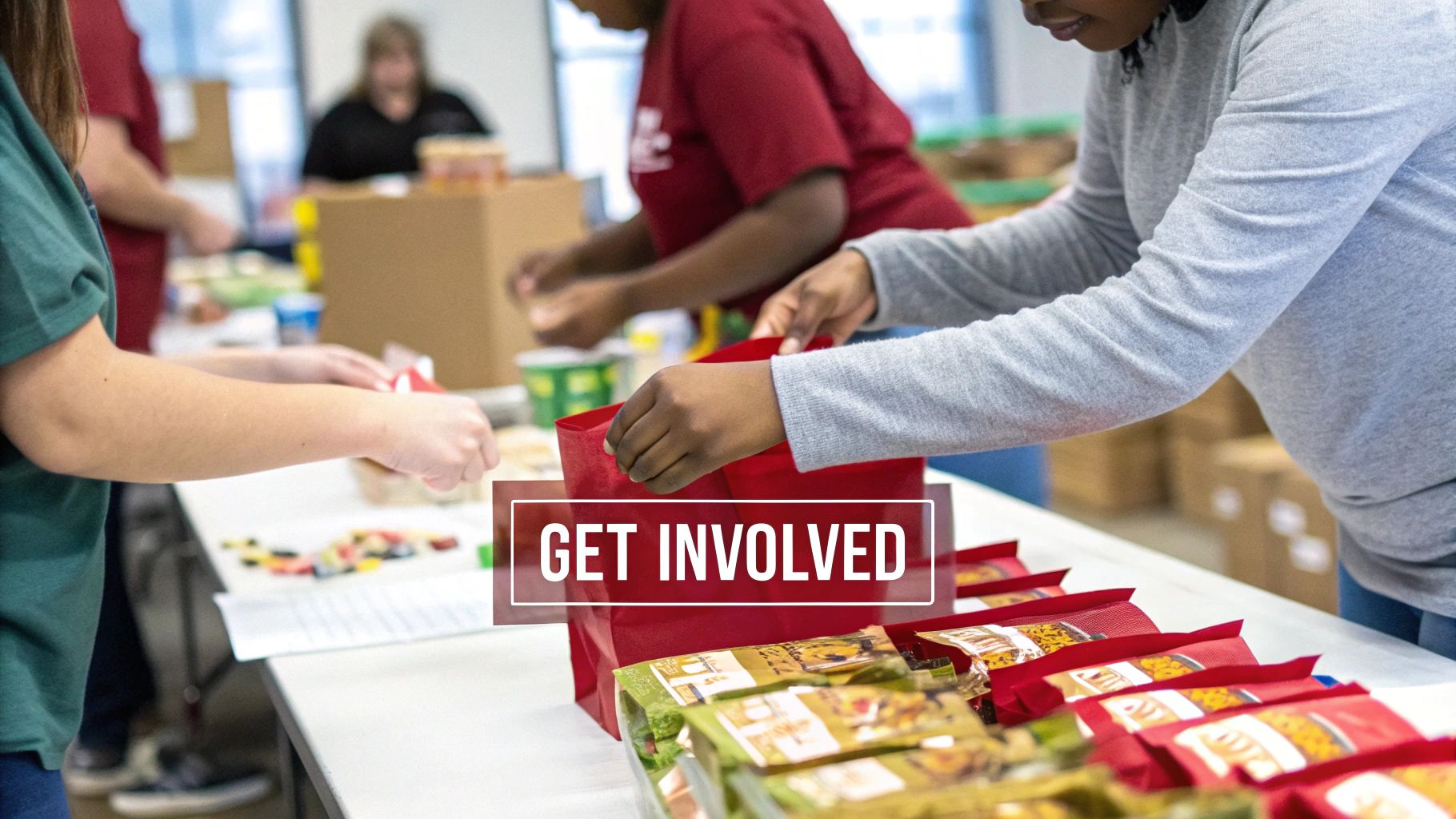
Volunteering is an incredible way to connect with the heart of our mission. We regularly host packing events where you can join other compassionate community members to assemble H.E.L.P. Snackz bags and family food boxes. These events are perfect for:
- Individuals and families
- Corporate teams seeking meaningful team-building activities
- Community and faith groups wanting to serve their neighbors
Make a Tax-Deductible Donation
Your financial gifts are the fuel that keeps our programs running. Every tax-deductible donation allows us to purchase nutritious food and essential supplies, ensuring no child falls through the cracks. One of the most impactful ways to give is through the Arizona Charitable Tax Credit.
Help Now AZ is a Qualifying Charitable Organization (QCO Code: 20944). This means your donation allows you to receive a dollar-for-dollar credit on your state taxes—up to $470 for individuals and $938 for couples filing jointly. You get to direct your tax dollars to help local children, often at no extra cost to you.
Become a Community Advocate
Beyond volunteering or donating, you can become an advocate. A fantastic way to start is to become a H.E.L.P. Snackz Champion by hosting a food drive at your workplace, school, or in your neighborhood. You can also simply spread the word. Share our mission on social media and talk to your family and friends about the undeniable link between homelessness and hunger. Every conversation helps dismantle the stigma and builds a more compassionate, informed community.
Frequently Asked Questions
How does homelessness directly cause food insecurity for children?
When a family loses their home, they lose access to a kitchen, refrigerator, and pantry. This forces them to rely on non-perishable, often less nutritious, food. The daily stress of finding shelter makes securing consistent, healthy meals nearly impossible, making food insecurity an immediate consequence of homelessness for a child.
Why are schools a good place to provide food support for homeless children?
School is often the only stable and safe environment in a homeless child’s life. Providing food support through schools allows us to reach children consistently and discreetly. We partner with school staff who know their students’ needs best, ensuring support gets to the right child with dignity and care.
How does my donation help with homeless children and food insecurity?
Your financial gift is a powerful tool against child hunger. It allows us to purchase nutritious, non-perishable food in bulk for our H.E.L.P. Snackz and Helping Hungry Families programs. As an Arizona Qualifying Charitable Organization (QCO: 20944), your donation may also qualify for the Arizona Charitable Tax Credit, turning your state tax dollars into direct support for local families.
If you or someone you know needs help—or if you’d like to support homeless children and families in Arizona—contact Help Now AZ. Call 602-341-3822, email [email protected], or visit helpnowaz.org to learn more, volunteer, or make a donation.